Publishing content on a schedule is not the same as running content marketing. A content marketing roadmap connects your content to actual marketing outcomes, such as leads, signups, and revenue, across every channel you use to reach an audience.
This guide covers what a content marketing roadmap includes, how it differs from a general content plan, and how to build one that ties directly to your funnel and your channels.
What Is a Content Marketing Roadmap?
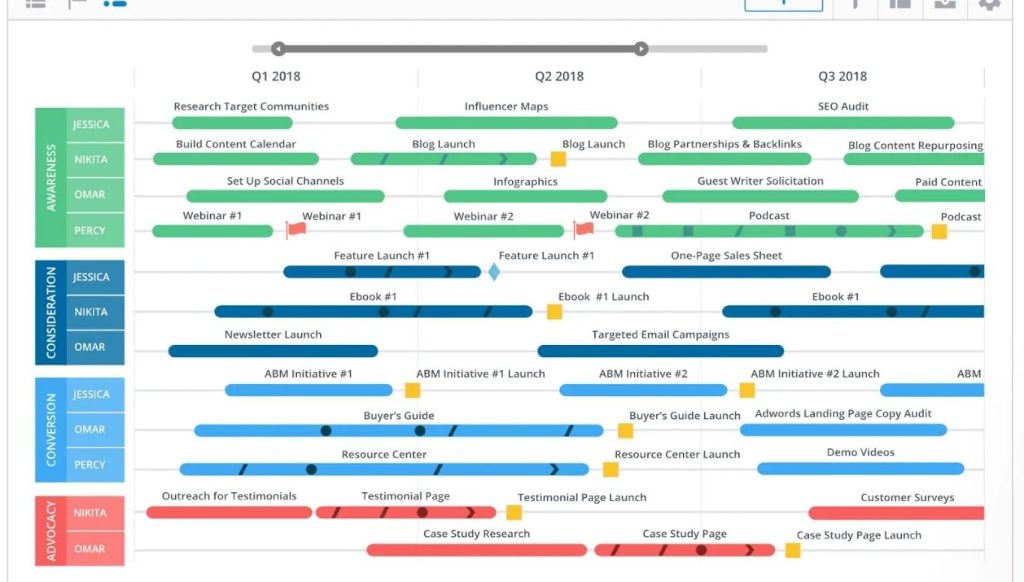
A content marketing roadmap is a plan that organizes content around marketing campaigns, distribution channels, and funnel stages, with each piece tied to a specific lead or revenue goal.
Where a general content roadmap maps topics to broad business goals, a content marketing roadmap goes further. It specifies which channel carries each piece, which funnel stage it targets, and which campaign it supports. It’s built by and for a marketing team that needs to hit pipeline numbers, not just publish good content.
On the marketing side at Domain Age Checker, my team builds a content marketing roadmap every quarter that ties directly to our lead goals.
When we launched our bulk domain checker tool, the roadmap included a launch blog post, three supporting SEO articles targeting related search terms, an email sequence to our existing list, and a social promotion schedule, all mapped to the same release date.
That coordination is the difference between content that sits quietly on the blog and content that actually moves people toward signing up.
Content Marketing Roadmap vs Content Roadmap
People often use these terms as if they mean the same thing, but the scope is different.
- Content roadmap: Maps topics and formats to business goals like traffic or topical authority, mostly organic and SEO-driven.
- Content marketing roadmap: Maps campaigns across every channel, including email, social, paid, and organic, to funnel stages and revenue goals.
A content roadmap can exist without much marketing coordination. A content marketing roadmap always assumes multiple channels working together toward the same target.
What a Content Marketing Roadmap Should Include
- Campaigns: Grouped initiatives with a clear start and end, such as a product launch or a seasonal promotion.
- Channels: Where each piece of content lives, including blog, email, organic social, paid social, and partnerships.
- Funnel stage: Whether the content targets awareness, consideration, or decision-stage buyers.
- Lead or revenue goals: The specific metric each campaign should influence, such as marketing qualified leads or trial signups.
- Sales alignment: Notes on how sales will use or reference the content during outreach or calls.
- Repurposing plan: How one piece of core content breaks down into smaller assets across channels.
How to Build a Content Marketing Roadmap
Step 1: Set Your Marketing Goals
Start with the number marketing owns, whether that’s qualified leads, trial signups, or pipeline value. Every campaign on the roadmap should ladder up to this number.
Step 2: Map Your Funnel Stages
Break your funnel into awareness, consideration, and decision stages, and identify what kind of content moves a prospect from one stage to the next.
Step 3: Plan Campaigns Around Key Dates
Identify product launches, industry events, and seasonal moments that deserve a coordinated content push rather than one-off posts.
Step 4: Assign Content to Channels
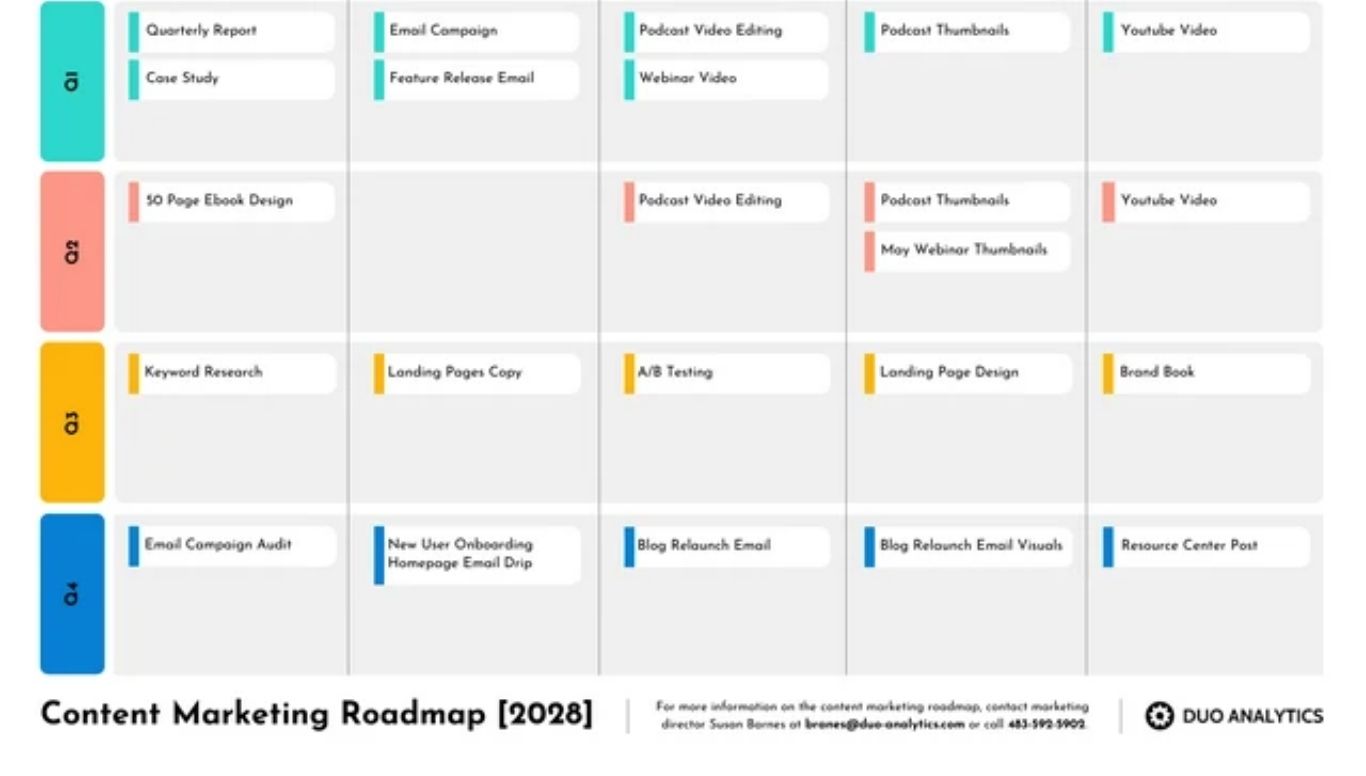
For each campaign, decide which channels carry the message. A single campaign often needs a cornerstone blog post, an email sequence, social posts, and sometimes paid promotion to reach full effect.
Step 5: Build a Repurposing Plan
Turn one long-form piece into multiple assets. A single guide can become an email series, five social posts, and a short video script without starting from scratch each time.
Step 6: Align with Sales
Share the roadmap with sales so they know what content is coming and can use it in outreach, especially decision-stage content like case studies and comparisons.
Step 7: Track Performance Against Goals
Measure each campaign against the lead or revenue goal it was built for, not just traffic or engagement. Adjust the next quarter’s roadmap based on what actually converted.
Sample Content Marketing Roadmap Structure
| Campaign | Channel Mix | Funnel Stage | Goal |
|---|---|---|---|
| Product launch: bulk checker | Blog, email, social | Awareness + Consideration | 500 trial signups |
| Customer case study series | Blog, sales enablement, LinkedIn | Decision | 20 sales-qualified leads |
| SEO cluster: domain authority | Blog, internal linking | Awareness | 10,000 organic sessions |
| Re-engagement email series | Email, retargeting ads | Consideration | 15% reactivation rate |
Each row ties a channel mix and funnel stage directly to a number, which makes it easy to report results back to leadership without guessing whether the quarter worked.
Common Content Marketing Roadmap Mistakes
Planning channels in isolation. Email, social, and blog teams working from separate calendars waste the compounding effect of a coordinated campaign.
Ignoring funnel stage. Publishing only top-of-funnel awareness content leaves decision-stage buyers with nothing to move them toward a purchase.
Skipping sales alignment. Content built without sales input often misses the objections and questions sales hears daily from real prospects.
Measuring the wrong metric. Traffic and pageviews look good in a report, but don’t tell you whether the content generated a pipeline. Tie every campaign to a lead or revenue goal from the start.
Final Thoughts
A content marketing roadmap turns individual pieces of content into coordinated campaigns that move prospects through your funnel and toward revenue. It connects channels that too often operate in silos and gives marketing a way to prove content’s impact on the business.
Set your goals first, map your funnel, and coordinate channels around each campaign instead of publishing content in isolation. Review results every quarter and let conversion data, not just traffic, shape what comes next.
Frequently Asked Questions
1. What is a content marketing roadmap?
A content marketing roadmap is a plan that organizes content campaigns across channels like email, social, and blog, tying each one to a funnel stage and a lead or revenue goal.
2. How is a content marketing roadmap different from a content calendar?
A content marketing roadmap defines campaigns, channels, and goals at a strategic level, while a content calendar lists the exact publish dates and details for each piece within those campaigns.
3. What channels belong on a content marketing roadmap?
Most roadmaps include blog content, email marketing, organic social, paid social, and sometimes partnerships or public relations, depending on where the target audience spends time.
4. How does a content marketing roadmap connect to the sales funnel?
Each campaign or piece of content gets tagged to a funnel stage, such as awareness, consideration, or decision, so marketing produces content that matches what a prospect needs at each stage.
5. Who should be involved in building a content marketing roadmap?
Content, social media, email marketing, and sales teams should all have input, since a roadmap built without sales alignment often misses decision-stage content that closes deals.
6. How do you measure success on a content marketing roadmap?
Success is measured against the specific lead or revenue goal set for each campaign, such as trial signups or marketing-qualified leads, rather than traffic or engagement alone.
7. How often should a content marketing roadmap be updated?
Most marketing teams rebuild the roadmap every quarter around upcoming campaigns and goals, while reviewing performance monthly to adjust channel mix or messaging as needed.