Local SEO services help professional businesses rank higher in local search results and Google Maps, turning nearby searches into phone calls, bookings, and new clients. For law firms, dental practices, accounting firms, consultants, clinics, and home service providers, the clients who matter most usually live or work within a short drive, which makes local visibility one of the highest-return investments a professional firm can make. This guide explains exactly what local SEO services include, from Google Business Profile optimization and review strategy to citations, local content, and ROI tracking, so you can decide with confidence whether to handle local SEO in-house or hire a professional service.

What Local SEO Services Actually Include
A professional local SEO service typically starts with a local SEO audit: a systematic review of your Google Business Profile, local rankings, citations, reviews, on-page signals, and competitors. The audit identifies exactly why competitors outrank you in the map pack and which fixes will move the needle fastest.
From there, services usually cover Google Business Profile optimization (categories, services, descriptions, photos, posts, and Q&A), citation building and cleanup across directories and data aggregators, and a review generation and response strategy. On the website side, expect on-page local optimization: location pages, local schema markup, NAP details in the footer, and locally relevant content. Many providers add local link building (chamber memberships, sponsorships, local press coverage) and monthly reporting that tracks map-pack rankings, calls, and direction requests rather than vanity metrics.
The best services tailor this mix to your market. A dentist in a competitive metro area needs a heavier program than a consultant in a small town, and an honest provider will say so during the sales process instead of selling every client the same package.
A thorough audit also benchmarks your review profile against competitors, checks for duplicate or unclaimed listings that split your authority, and reviews your website’s technical health, since crawl errors and slow pages suppress even well-optimized local pages. The deliverable should be a prioritized roadmap, not a generic checklist: the three to five actions that will move rankings this quarter, with the rest scheduled sensibly behind them.
Google Business Profile Optimization: The Foundation
Your Google Business Profile (formerly Google My Business) is the single most influential asset in local SEO. It powers your appearance in the map pack, the knowledge panel, and Google Maps, and for many professional firms it generates more calls than the website itself.
Optimization starts with the basics done correctly: claim and verify the listing, choose the most accurate primary category (for example, “Personal injury attorney” rather than the generic “Lawyer”), add relevant secondary categories, and write a keyword-aware business description that explains who you serve. List every service you offer with descriptions, set accurate hours including holiday hours, and upload high-quality photos of your team, office, and work. Businesses with photos consistently earn more clicks and direction requests.
Then keep the profile alive. Publish Google Posts about offers, events, and articles; seed the Q&A section with real questions clients ask and answer them yourself before strangers do; and enable messaging and booking links where available. A complete, active profile signals to Google that the business is legitimate and engaged, which directly supports map-pack visibility. When you check SEO ranking performance for local terms, improvements to the profile are often the first changes that move the needle.
Do not overlook the products and services tabs within the profile: adding detailed service entries with descriptions gives Google more relevance signals and gives searchers more reasons to choose you. Use the attributes section honestly (women-led, veteran-led, accessibility features), since these feed filters some clients use. Finally, keep information synchronized: if hours, services, or phone numbers change on your website, update the profile the same day. Mismatches between the profile and the website erode the consistency signals that local rankings depend on.
Winning the Local Map Pack
The local map pack, the three business listings with a map that appear above organic results for local queries, captures the majority of clicks for “near me” and “city plus service” searches. Google ranks the pack on three factors: relevance (how well the listing matches the query), distance (proximity of the searcher to the business), and prominence (the business’s overall authority: reviews, citations, links, and brand recognition).
You cannot change distance, so professional local SEO focuses on relevance and prominence. Relevance improves through precise categories, service lists, and on-page content that mirrors how clients search. Prominence builds through review volume and ratings, citation consistency, local links, and branded search volume. Because the pack only shows three businesses, small advantages compound: moving from position five to position three can double incoming calls. Track map-pack positions separately from organic positions, since they move on different signals and often respond faster to profile and review work.
Because map-pack results are personalized by location, measure rankings with a geo-grid tracking tool that samples positions across your service area rather than from a single point. A firm can rank first downtown and fifteenth in the suburbs, and that variance tells you exactly where to focus review and content efforts. Re-check the grid monthly; it is the most honest picture of local visibility you can get.
Reviews Strategy: Your Most Powerful Local Asset
Reviews influence both rankings and conversion. Review signals affect local rankings, and prospective clients treat star ratings as a primary filter: many will not even click a firm below four stars. A professional local SEO service therefore treats reviews as a managed program, not a passive hope.
The program has four parts. First, generate a steady flow of new reviews by asking every satisfied client at the right moment: after a successful case outcome, a completed treatment plan, or a finished project. Make it frictionless with a direct review link sent by text or email. Second, respond to every review, positive and negative, within days. Responses show prospects that the firm is attentive and give you a chance to add relevant keywords naturally. Third, handle negative reviews professionally: acknowledge the concern, take the conversation offline, and never argue publicly. Fourth, monitor velocity and rating: a sudden stop in new reviews or a dip below 4.5 stars deserves immediate attention. Never buy fake reviews or incentivize them in ways that violate platform policies; the short-term gain is not worth the risk of removal or suspension.
Extend review content onto your own website as well. A testimonials page with review schema markup can earn star ratings in organic results, reinforcing the same trust signals off the profile. When responding to reviews, weave in natural references to services and locations without sounding forced. Over time, this body of review text becomes a unique, keyword-rich asset competitors cannot easily replicate.
Local Citations and NAP Consistency
Citations are mentions of your business name, address, and phone number (NAP) on directories, review sites, and data aggregators such as Yelp, Bing Places, Apple Maps, and industry-specific directories. Consistent citations reinforce to Google that your business is real and located where you claim.
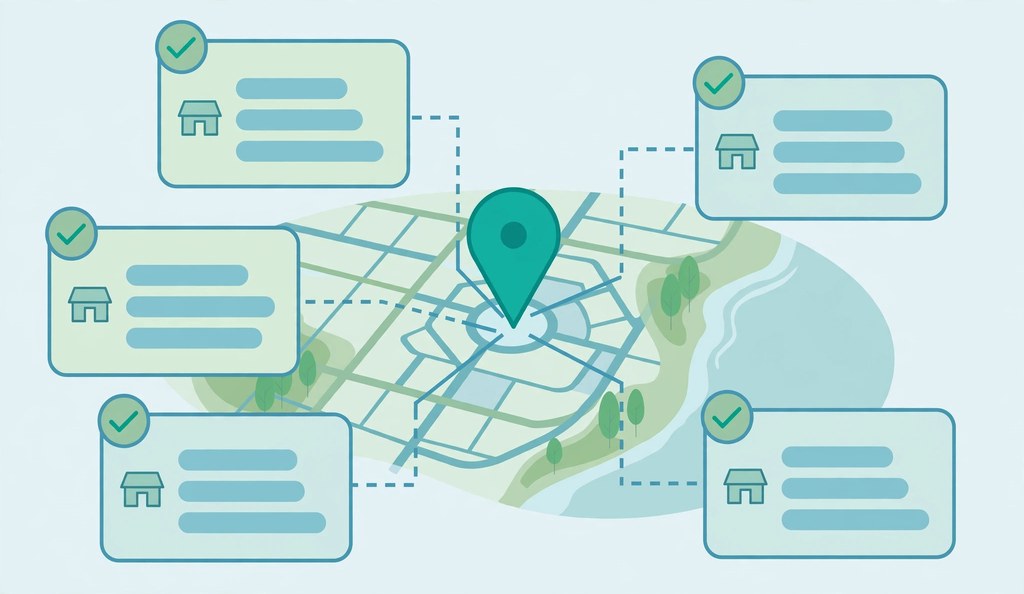
NAP consistency means your name, address, and phone number appear identically everywhere. “Suite 200” on one site and “Ste. 200” on another creates ambiguity that weakens trust. A citation audit finds duplicates, incorrect listings, and old addresses from previous office moves, then cleans them up. For professional firms, niche directories matter too: legal directories for law firms, health directories for clinics, and trade associations for contractors. Running a full seo website check of your location pages also helps here, since thin or duplicated city pages undermine the same trust signals that citations are meant to build.
Prioritize data aggregators (such as Neustar Localeze, Data Axle, and Foursquare) because hundreds of smaller directories pull from them; fixing the source fixes the downstream copies. Then work through the major platforms manually: Google, Bing, Apple Maps, Yelp, and Facebook. Expect cleanup to take several weeks, since directories update on their own schedules. After the initial cleanup, a light ongoing monitoring cadence (quarterly scans) catches new duplicates before they accumulate. For multi-location firms, maintain a single master NAP record per location and never let individual offices create their own variations.
Local Keyword Targeting and On-Page Local Signals
Local keyword strategy targets the queries clients actually type: service plus city (“divorce lawyer Austin”), “near me” variants, and neighborhood terms. Each core service deserves a dedicated, substantive location page rather than a single page that stuffs every city name into the footer.
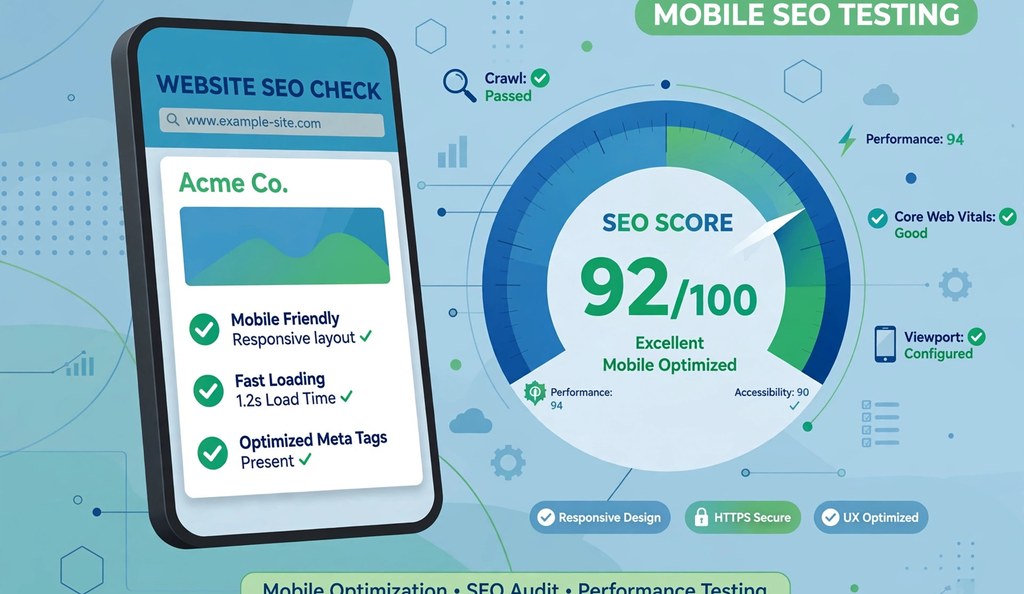
On-page local signals include the city and region in title tags, headings, and body copy written naturally; an embedded map and driving directions; local business schema markup (LocalBusiness or a subtype such as Dentist or Attorney); and NAP details in the site footer matching the Google Business Profile exactly. Run each key page through an seo page checker to confirm titles, headings, and internal links are properly structured, and verify the mobile experience with a mobile SEO check, since most local searches happen on phones. Internal linking between location pages and relevant blog content spreads authority where it is needed most.
Support location pages with a local content strategy: blog posts about community involvement, local case studies, seasonal service guides for your area, and sponsorship announcements. This content earns local links naturally and gives the site freshness signals tied to your market. Keep the publishing cadence realistic; one genuinely useful local article per month outperforms four thin posts.
Service-Area Businesses: Ranking Without a Storefront
Plumbers, electricians, consultants, and other service-area businesses visit clients rather than receiving them, and Google lets these businesses hide their street address while defining service areas by city, postal code, or radius. Set this up correctly during profile creation: choose the service-area business option, hide the address, and list the areas you genuinely serve.
Ranking as a service-area business relies more heavily on reviews, service-area content, and local links, since you lack the proximity signal of a visible storefront. Build dedicated pages for each primary service area with genuinely local content: case studies from that area, local landmarks, and area-specific FAQs. Avoid the trap of publishing dozens of near-identical city pages; thin doorway pages trigger quality filters and convert poorly. A smaller set of deep, useful area pages outperforms a large set of shallow ones every time.
Local Link Building: Earning Authority in Your Market
Local links remain one of the strongest prominence signals, and professional firms have natural advantages in earning them. Start with memberships and sponsorships: the local chamber of commerce, bar association, medical society, or trade group typically links to member directories. Sponsor a youth sports team, a charity event, or a community program and ask for a link from the organizer’s website.
Digital PR with a local angle earns editorial links: publish a survey of local market trends, comment on local news stories in your practice area, or offer free educational workshops that local media cover. Partnerships with complementary businesses (a realtor linking to a home inspector, a dentist linking to an orthodontist) create natural reciprocal value. Alumni profiles, guest lectures at local colleges, and expert quotes for regional publications all convert professional credibility into links. Avoid buying links or joining link schemes; a small set of genuine local links outperforms a large set of manipulative ones and carries no penalty risk.
Common Local SEO Mistakes Professional Firms Make
Several mistakes recur across professional firms. Keyword-stuffed business names (“Smith Law, Best Divorce Lawyer Austin TX”) violate Google’s guidelines and risk suspension; use your real business name. Creating multiple listings for the same location splits reviews and authority; one location gets one listing. Ignoring the Q&A section lets competitors or misinformed users answer questions about your firm. Neglecting photos leaves clicks on the table, since listings with images earn substantially more engagement.
On the website side, common errors include one page targeting every city, technical issues nobody monitors, and publishing no local content for years while competitors publish steadily. Finally, many firms measure nothing: without call tracking and ranking data, local SEO becomes an act of faith rather than an accountable channel. Each of these is fixable, and fixing them in combination often produces the step-change firms expect from a professional service.
Tracking Local SEO ROI
Local SEO reporting should connect rankings to revenue, not just show position tables. The metrics that matter for professional firms are phone calls (tracked with call tracking numbers on the profile and website), contact form submissions and bookings, direction requests and website clicks from the Google Business Profile, and map-pack rankings for priority service-plus-city terms.
Set up conversion tracking before the campaign starts so every improvement is measurable. When you check website seo ranking data each month, compare it against lead volume: rankings that do not produce calls indicate a targeting or conversion problem, not a reporting gap. A monthly seo score check of technical health keeps the site side of the equation honest, while profile insights show how clients find and interact with the listing. Professional firms should also track cost per acquired client against other channels; local SEO usually wins this comparison within a year for firms in competitive markets.
Benchmark against competitors quarterly. Note how many reviews the top three map-pack competitors have, how complete their profiles are, and how often they publish posts; your targets should be set relative to them, not to abstract ideals. A market where the leaders have 400 reviews demands a different review program than one where they have 40. This competitive framing keeps budgets realistic and priorities honest.
DIY Local SEO vs. Hiring a Professional Service
Motivated firms can handle local SEO basics themselves: claiming the profile, requesting reviews, fixing NAP inconsistencies, and publishing location pages. These fundamentals deliver real gains and cost nothing but time.
Hiring a service makes sense when competition is stiff, time is scarce, or technical issues block progress. Agencies and consultants bring structured processes, citation networks, content production, and the experience to diagnose ranking drops quickly. If you go the DIY route, invest in learning the fundamentals first, including background factors such as domain history; our guide on how to check domain age explains one signal that influences how aggressively a new site can compete. A hybrid approach works well for many firms: handle reviews and profile posts internally while outsourcing audits, citations, and content to specialists.
How to Choose the Right Local SEO Service Provider
Not all local SEO providers are equal, and the sales pitch rarely reveals the difference. Evaluate candidates on transparency: they should explain exactly what they will do each month and show you sample reports before you sign. Ask how they measure success; providers who talk about calls, bookings, and map-pack visibility think like business partners, while those who talk only about activity may be selling motion.
Check reviews and references from businesses like yours, and ask how the provider handles multi-location or competitive markets if that applies. Confirm they follow Google’s guidelines (no fake reviews, no keyword-stuffed business names, no link schemes) and that you retain ownership of all assets: the profile, citations, content, and data. Be cautious of guaranteed rankings, rock-bottom pricing, and long lock-in contracts with no performance clauses. A short initial term with clear deliverables lets the results earn the renewal.
How Much Do Local SEO Services Cost?
Local SEO pricing varies with market competition and scope. As a rough guide, one-time setup projects (profile optimization, citation cleanup, foundational pages) typically run from a few hundred to a few thousand dollars. Monthly retainers for ongoing local SEO commonly range from around $500 per month for single-location firms in smaller markets to $2,500 or more for multi-location firms or fiercely competitive practice areas such as personal injury law.
What drives cost is the amount of work required to outrank entrenched competitors: content production, link acquisition, and review program management all scale with ambition. Be wary of prices that seem too good to be true (a $99 per month “local SEO” package cannot fund real work) and of long contracts with no performance transparency. A trustworthy provider explains exactly what you get each month, reports on calls and rankings rather than activities alone, and lets the results justify renewal.
Frequently Asked Questions
What are local SEO services?
Local SEO services optimize a business’s online presence to attract customers from local searches, primarily through Google Business Profile management, citations, reviews, and location-focused website content. They target the map pack and local organic results rather than national rankings.
How long does local SEO take to work?
Most professional firms see initial movement within two to three months and meaningful results within four to six, depending on competition and starting position. Review generation and profile improvements often produce the fastest visible wins.
What is the Google local map pack?
The map pack is the block of three local business listings with a map that appears above organic results for local queries. It captures the majority of clicks for “near me” searches, which makes it the most valuable placement in local SEO.
How do I optimize my Google Business Profile?
Verify the listing, choose precise categories, complete every field, add services and photos, publish regular posts, seed the Q&A section, and keep hours accurate. Then maintain it actively: an optimized but neglected profile gradually loses ground to engaged competitors.
How many reviews do I need to rank locally?
There is no fixed number; what matters is having more recent, higher-rated reviews than the competitors you want to outrank. A steady flow of new reviews matters more than a large but aging total.
How do I get more Google reviews for my business?
Ask satisfied clients directly at the moment of peak satisfaction, and make it effortless with a short direct review link sent by text or email. Train front-desk staff to ask in person, follow up once with non-responders, and respond to every review you receive to keep the momentum visible.
What are local citations?
Citations are online mentions of your business name, address, and phone number on directories, review sites, and data aggregators. They validate your business’s existence and location to search engines.
What does NAP consistency mean?
NAP consistency means your business name, address, and phone number appear identically across the web. Inconsistent details confuse search engines and weaken the trust signals that support local rankings.
What is local citation building?
Citation building is the process of creating and correcting business listings across directories and data aggregators to establish consistent NAP information. It starts with the major data aggregators, then covers key platforms and industry-specific directories, with ongoing monitoring to catch duplicates.
How do I handle SEO for multiple business locations?
Give each location its own Google Business Profile, its own location page with unique content, and its own citation set, all managed from one consistent master record. Avoid sharing phone numbers across locations and never create listings for virtual offices or PO boxes.
Can I do local SEO myself?
Yes, the fundamentals (profile optimization, review requests, citation cleanup, location pages) are manageable in-house. Hire a professional service when competition is intense, time is limited, or technical problems block progress.
How much do local SEO services cost?
Expect roughly $500 to $2,500 per month for ongoing services, plus one-time setup fees for audits and foundational work. Pricing scales with market competition, number of locations, and the volume of content and outreach required.
Do I need local SEO if I already run Google Ads?
Yes, the two channels complement each other: ads deliver immediate visibility while local SEO builds compounding organic presence that lowers acquisition costs over time. Firms that run both capture more total local demand than firms relying on either alone.
What is the difference between local SEO and traditional SEO?
Local SEO targets geographic queries and map-pack visibility through profiles, citations, and reviews, while traditional SEO targets broader organic rankings through content and authority building. Professional firms usually need both, with local SEO as the priority.
How do service-area businesses rank without a storefront address?
Service-area businesses hide their address in Google Business Profile settings and compete on reviews, service-area content, citations, and local links. Dedicated pages for each served area with genuinely local content are the key on-site tactic.
Should I create a separate page for every city I serve?
Create dedicated pages only for areas you genuinely serve, and make each page substantively unique with local case studies, FAQs, and details. Dozens of near-duplicate city pages trigger quality filters and convert poorly.
Does social media affect local SEO?
Social signals are not a direct local ranking factor, but active social profiles drive branded searches, reviews, and local links that do influence visibility. Treat social as a supporting channel that amplifies the assets local SEO depends on.
What is the difference between Google Business Profile and Google Maps marketing?
There is no practical difference: your Google Business Profile is what appears in Google Maps, the map pack, and the knowledge panel. Optimizing the profile is Google Maps marketing; the two terms describe the same asset from different angles.
What should a local SEO report include?
A useful report shows map-pack rankings for priority terms, profile interactions (calls, clicks, direction requests), website conversions from local traffic, reviews gained, and work completed that month. It should connect every metric to business outcomes in plain language.
How do I track local SEO results?
Track phone calls, form submissions, direction requests, and map-pack rankings for priority terms, and compare them against lead volume monthly. When you check seo rankings each month, tie every movement to the work that caused it so reporting stays connected to revenue.
Conclusion
Local SEO services give professional firms a systematic way to win the nearby clients who drive their revenue: an optimized Google Business Profile, a proactive review program, consistent citations, locally earned links, and locally focused website content compound into durable map-pack visibility. Whether you handle the fundamentals in-house or hire a professional service for competitive markets, the formula stays the same: be findable, be credible, and make it easy for local clients to contact you. Start with an honest audit, fix the foundations first, and measure everything against calls and clients rather than rankings alone. For background on how local search developed as a discipline, see the overview of local search engine optimisation on Wikipedia.