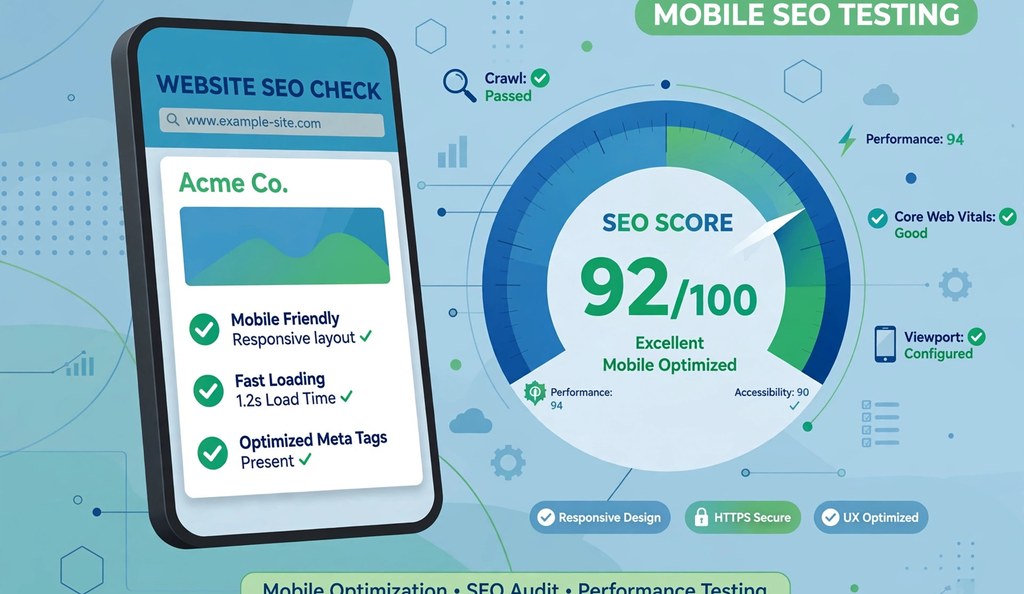
Technical SEO services identify and fix the crawlability, speed, and indexation problems that prevent search engines from properly accessing, understanding, and ranking your website. While content and links earn rankings, technical SEO makes those rankings possible: if Google cannot crawl your pages, render your content, or load your site quickly, even the best content underperforms. This complete guide explains what technical SEO services cover, how a professional technical audit works, the most common issues specialists uncover, what these services cost, and how to choose a provider you can trust.
What Technical SEO Services Cover
Technical SEO services address everything that happens behind the scenes of your website: the infrastructure that determines whether search engines can find, crawl, render, and index your pages efficiently. A comprehensive service typically covers crawlability and indexation (can search engines reach your pages?), site speed and Core Web Vitals (do pages load fast and remain stable?), mobile-friendliness (does the site work flawlessly on phones?), structured data (can search engines understand your content’s context?), HTTPS and security, XML sitemaps and robots.txt, canonicalization, and log file analysis for larger sites.
Unlike content SEO, which is ongoing and creative, technical SEO is diagnostic and engineering-focused. Specialists use crawlers, log analyzers, and performance tools to find problems invisible to the naked eye, then either implement fixes directly or provide developers with precise specifications. Most engagements begin with a one-time technical SEO audit and continue with implementation support and ongoing monitoring.
Crawlability and Indexation: Helping Search Engines Find Your Pages
Before a page can rank, search engines must discover it, crawl it, and add it to their index. Crawlability refers to whether bots can reach your pages through internal links without hitting dead ends, redirect chains, or blocked resources. Indexation refers to whether crawled pages are actually stored in the search index and eligible to rank.

Technical SEO services examine your site’s architecture for orphan pages (pages with no internal links pointing to them), excessive crawl depth (important pages buried five or more clicks from the homepage), broken internal links, and redirect chains that waste crawl budget. They review indexation reports to find pages that are crawled but not indexed, a common sign of thin content or quality filters, and pages blocked unintentionally by noindex tags or robots.txt rules. Fixing these foundational issues often produces ranking improvements within weeks, because the site finally lets search engines see what was there all along.
Site Speed and Core Web Vitals
Page speed is a confirmed ranking factor and a major driver of user behavior: slow pages increase bounce rates and reduce conversions. Google measures loading experience through Core Web Vitals: Largest Contentful Paint (how fast the main content loads), Interaction to Next Paint (how quickly the page responds to input), and Cumulative Layout Shift (how much the layout jumps around while loading).

Technical SEO specialists diagnose speed problems with lab and field data, then implement fixes such as image compression and modern formats, browser caching, minification of CSS and JavaScript, deferred loading of non-critical scripts, server response time improvements, and content delivery network (CDN) configuration. A quick free website speed test gives you a baseline before work begins, and the same check after implementation quantifies the improvement. Because speed affects every page on the site, these fixes deliver site-wide benefits that compound over time.
Mobile-Friendliness and Mobile-First Indexing
Google predominantly uses the mobile version of your site for indexing and ranking, a shift known as mobile-first indexing. A site that looks fine on desktop but breaks on phones will underperform in search regardless of its desktop quality.
Technical SEO services test mobile usability systematically: responsive layouts that adapt to screen sizes, tap targets large enough for fingers, readable font sizes without zooming, no horizontal scrolling, and no intrusive interstitials covering content. They also verify that the mobile and desktop versions serve equivalent content, since stripped-down mobile pages can lose the text and structured data that drive rankings. With most searches now happening on mobile devices, mobile-friendliness is not a bonus feature; it is the primary version of your site.
Structured Data and Schema Markup
Structured data (schema markup) is code added to your pages that helps search engines understand content context: whether a page describes a product, a recipe, an event, a local business, an article, or an FAQ. Correctly implemented schema can earn rich results in search listings, such as star ratings, prices, event dates, and FAQ dropdowns, which significantly increase click-through rates.
Technical SEO services audit existing markup for errors, missing required properties, and invalid types, then implement schema where it is absent: Organization and WebSite markup site-wide, Article markup on blog content, Product markup on e-commerce pages, LocalBusiness markup for physical locations, and FAQPage markup where appropriate. They validate everything against current standards, since invalid markup is simply ignored by search engines and represents wasted effort.
HTTPS, Security, and Trust Signals
HTTPS encrypts the connection between your site and its visitors, and Google treats it as a ranking signal while browsers warn users away from non-secure pages. Technical SEO services verify that your SSL certificate is valid and properly configured, that all internal links and resources load over HTTPS (no mixed content warnings), and that HTTP versions redirect cleanly to HTTPS with 301 redirects.
Beyond the certificate itself, specialists check security headers, ensure the site is not flagged for malware or phishing, and confirm that login and checkout pages follow security best practices. For e-commerce and lead-generation sites, these trust signals directly affect both rankings and conversion rates: visitors who see security warnings leave, and their departure sends negative engagement signals back to search engines.
XML Sitemaps and Robots.txt
An XML sitemap is a file that lists your important pages and helps search engines discover and prioritize them, particularly useful for large sites, new sites with few external links, and sites with rich media content. Technical SEO services ensure your sitemap includes only canonical, indexable URLs (no redirects, no 404s, no noindexed pages), stays within size limits, and is submitted to search consoles and referenced in robots.txt.
The robots.txt file tells crawlers which parts of your site they may and may not access. It is a small file with outsized destructive potential: a single misplaced disallow rule can block an entire site from crawling. Specialists review robots.txt with a free robots.txt checker approach, verifying that staging environments are blocked, admin areas are excluded, and no important sections are accidentally disallowed. They also confirm that the sitemap is declared correctly; you can cross-check sitemap health separately with a free sitemap checker to catch formatting errors before they cost you indexation.
Canonicalization and Duplicate Content
Duplicate content, identical or near-identical content accessible at multiple URLs, confuses search engines about which version to index and rank, diluting ranking signals across copies. Common causes include HTTP/HTTPS and www/non-www variants, URL parameters for tracking and sorting, printer-friendly pages, and syndicated or thin location pages.
Technical SEO services identify duplication with site crawls and similarity analysis, then resolve it with canonical tags (which designate the preferred version of a page), 301 redirects (which consolidate true duplicates), and parameter handling rules. A periodic seo website check for duplicated text across your pages catches new instances before they accumulate. Proper canonicalization concentrates authority on the pages you actually want to rank instead of scattering it across accidental copies.
Log File Analysis and Crawl Budget Optimization
For larger sites, technical SEO services go deeper with log file analysis: examining the server’s record of every search engine bot visit to see exactly which pages bots crawl, how often, and where they waste time. This reveals problems invisible to standard crawlers, such as bots spending their crawl budget on faceted navigation URLs, internal search result pages, or legacy redirects instead of important content.
Crawl budget is the number of pages a search engine will crawl on your site in a given period, and it matters most for sites with thousands of pages. Optimization tactics include blocking low-value URL patterns in robots.txt, using nofollow strategically on internal links to unimportant pages, improving internal linking to priority content, and speeding up server response times so bots can crawl more pages per visit. For enterprise and e-commerce sites, log file analysis routinely uncovers the highest-ROI technical fixes available.
How a Professional Technical SEO Audit Works
A professional technical audit follows a structured process. Discovery comes first: the specialist gathers access to analytics, search consoles, and the CMS, and documents the site’s platform, history, and business priorities. Automated crawling follows, with tools spidering the site to catalog status codes, redirects, titles, meta tags, headings, canonicals, and structured data at scale.
Manual analysis is where expertise matters most: interpreting crawl data alongside log files, speed measurements, and indexation reports to distinguish critical issues from noise. The deliverable is a prioritized report that ranks findings by expected impact and implementation effort, with clear specifications a developer can execute. Finally, a review session walks stakeholders through the findings, and implementation support (either direct fixes or developer guidance with QA verification) ensures recommendations actually ship. A good audit does not just list problems; it creates an actionable roadmap.
The Most Common Technical Issues Audits Uncover
Across thousands of audits, the same issues appear repeatedly. Slow page speed from unoptimized images and render-blocking scripts tops the list. Missing or duplicate title tags and meta descriptions waste ranking and click-through opportunities. Broken internal links and redirect chains leak authority and frustrate users. Unintentional noindex tags, often left over from staging environments, silently remove pages from search results.
Other frequent findings include missing XML sitemaps or sitemaps full of dead URLs, robots.txt rules blocking important sections, duplicate content from URL parameters, missing or invalid structured data, mixed content warnings on HTTPS pages, poor mobile usability, and orphan pages with no internal links. Most sites suffer from several of these simultaneously, which is why a systematic audit outperforms ad hoc fixes: it finds everything, prioritizes intelligently, and prevents the whack-a-mole cycle of fixing one issue while others persist.
Tools Professionals Use to Check SEO Ranking and Site Health
Technical SEO specialists rely on a standard toolkit. Site crawlers (such as Screaming Frog or Sitebulb) map site structure and flag technical issues at scale. Search consoles (Google Search Console and Bing Webmaster Tools) provide authoritative data on indexation, crawl errors, and Core Web Vitals. Speed tools (PageSpeed Insights, WebPageTest) diagnose performance with lab and field data. Log file analyzers reveal actual bot behavior for large sites.
For ongoing monitoring, rank tracking tools let you check seo ranking movements after technical fixes ship, connecting engineering work to visible outcomes. Independent verification matters too: after a provider claims fixes are complete, run your own seo page checker review of key templates and a fresh crawl to confirm the issues are genuinely resolved. When you check seo rankings in the weeks following implementation, expect gradual improvement as search engines recrawl and reassess the fixed pages.
How Much Do Technical SEO Services Cost?
Technical SEO pricing depends on site size, platform complexity, and whether you need a one-time audit or ongoing support. As a rough guide, a one-time technical audit for a small to medium site typically costs between $1,000 and $5,000, while audits for large e-commerce or enterprise sites can exceed $10,000. Implementation (the developer work to fix findings) is often billed separately, either hourly or as a fixed project.
Monthly technical retainers, which cover monitoring, recurring mini-audits, and implementation support, commonly range from $1,000 to $5,000 per month. Factors that push costs higher include JavaScript-heavy sites, international multi-region setups, site migrations, and penalty recovery work. Be cautious of suspiciously cheap audits: a genuine technical audit requires hours of expert analysis, and a $99 automated report is not a substitute. Ask exactly what the deliverable includes and whether implementation support is part of the price.
How to Choose a Technical SEO Service Provider
Choosing the right provider starts with evidence of expertise: detailed case studies showing before-and-after metrics, sample audit excerpts, and references from businesses with similar platforms. During the sales process, ask how they would approach your specific situation; vague answers suggest a template-driven operation.
Evaluate their process and deliverables: will you receive a prioritized report with developer-ready specifications, or a generic checklist? Confirm implementation support: the best providers either fix issues directly or work alongside your developers with QA verification. Check that they measure outcomes with real data, encouraging you to independently check website seo ranking and crawl improvements rather than taking claims on faith. Finally, assess communication: you need plain-language explanations of technical issues and their business impact, not jargon. A provider who cannot explain why a fix matters probably does not understand it deeply enough.
Ongoing Monitoring: Keeping Your Site Technically Healthy
Technical SEO is not a one-time project. CMS updates, plugin changes, new content, and redesigns continuously introduce new issues: a plugin update can break structured data, a new template can slow every page, and a migration can strand thousands of URLs. Without monitoring, these regressions accumulate silently until rankings drop.
A sensible monitoring cadence includes weekly automated crawls for new errors, monthly reviews of search console coverage and Core Web Vitals, and a full technical audit annually (or after any major site change). A regular seo score check across technical health dimensions keeps the big picture visible between deep dives. Many providers offer monitoring retainers precisely because prevention costs far less than recovery: catching a broken sitemap or a site-wide noindex tag within days instead of months can save an entire quarter of organic traffic.
Frequently Asked Questions
What is technical SEO?
Technical SEO is the practice of optimizing a website’s infrastructure so search engines can crawl, render, index, and rank its pages efficiently. It covers site speed, mobile-friendliness, crawlability, indexation, structured data, and security.
What do technical SEO services include?
Technical SEO services typically include a comprehensive audit, fixes for crawl and indexation issues, speed optimization, mobile usability improvements, structured data implementation, and ongoing monitoring. Most engagements start with an audit and continue with implementation support.
How long does a technical SEO audit take?
A thorough technical audit typically takes one to three weeks depending on site size and complexity. Small sites can be audited in days, while large e-commerce or enterprise sites require deeper log file and multi-region analysis.
How much do technical SEO services cost?
One-time audits typically cost $1,000 to $5,000 for small to medium sites, with monthly monitoring retainers ranging from $1,000 to $5,000. Enterprise sites and complex platforms cost more; implementation work is often billed separately.
What are Core Web Vitals?
Core Web Vitals are Google’s metrics for user experience: Largest Contentful Paint (loading), Interaction to Next Paint (responsiveness), and Cumulative Layout Shift (visual stability). They are confirmed ranking signals and directly affect how visitors perceive your site.
What is crawl budget?
Crawl budget is the number of pages a search engine will crawl on your site in a given period. It matters most for large sites, where wasted crawls on low-value URLs can leave important pages undiscovered.
How do I check if my site has technical SEO issues?
Start with Google Search Console’s coverage and Core Web Vitals reports, then run an independent seo website checker review of your key pages. For a complete picture, a professional crawl-based audit finds issues these surface checks miss.
What is the difference between technical SEO and on-page SEO?
Technical SEO covers site infrastructure (crawlability, speed, indexation, security), while on-page SEO covers content optimization (keywords, titles, headings, internal linking). Both are necessary; technical SEO ensures pages can rank, and on-page SEO determines what they rank for.
Does site speed really affect rankings?
Yes, page speed is a confirmed ranking factor, and it strongly affects user behavior: slow pages increase bounce rates and reduce conversions. Speed improvements deliver both ranking and revenue benefits.
What is an XML sitemap and do I need one?
An XML sitemap is a file listing your important pages to help search engines discover and prioritize them. Every site benefits from one, and large or new sites need one most.
What does robots.txt do?
Robots.txt tells search engine crawlers which parts of your site they may access. It is essential for blocking staging environments and low-value pages, but a single error can block your entire site, so it demands expert handling.
How often should I run a technical SEO audit?
Run a full technical audit at least once a year, plus a focused audit after any redesign, migration, or platform change. Continuous monitoring between audits catches regressions before they affect rankings.
Can I do technical SEO myself?
Basic tasks (submitting sitemaps, fixing broken links, compressing images) are manageable with the right tools. Complex work such as log file analysis, JavaScript rendering issues, and large-scale migrations usually requires a specialist.
Will fixing technical SEO issues improve my rankings?
Fixing genuine technical issues reliably improves rankings when those issues were holding the site back, which is common. Technical fixes remove barriers; content and authority then determine how high the site can climb.
Conclusion
Technical SEO services provide the foundation every other SEO activity depends on: a site that search engines can crawl efficiently, index completely, and load quickly earns the right to compete on content and authority. Invest in a thorough audit, prioritize fixes by impact, verify results with independent checks, and monitor continuously to prevent regressions. The sites that win in competitive markets are rarely the ones with the most content; they are the ones with the fewest technical barriers. For background on the discipline as a whole, see the overview of search engine optimization on Wikipedia.