Last updated: October 14, 2026. This guide was fully rewritten with current B2B buying behavior and stronger agency vetting criteria.
B2B SEO services help business to business companies get found on Google by the decision makers who buy from them. Unlike consumer SEO, B2B search targets longer buying cycles, committee decisions, and low volume, high value keywords where a single ranking can be worth six figures in pipeline.
This guide explains what B2B SEO actually involves, how it differs from B2C SEO, what services a good provider delivers, and how to choose one without getting burned. Whether you are hiring your first agency or auditing your current one, use this as your evaluation framework.
What Makes B2B SEO Different
B2B buyers do not impulse purchase. A typical enterprise deal involves six to ten stakeholders, months of research, and dozens of searches before anyone fills out a form. Your SEO strategy has to serve every stage of that journey, from the junior researcher googling a problem to the CFO validating the vendor shortlist.
Keyword strategy flips accordingly. Instead of chasing massive volume, B2B SEO targets high intent, low volume terms: “enterprise warehouse management software pricing” gets 50 searches a month but each one is a qualified buyer. Ten such keywords outperform a thousand informational visits that never convert.
Content depth matters more too. B2B buyers are experts evaluating experts. Thin 800 word posts do not survive contact with a technical buying committee. Ranking in B2B means publishing the most thorough, credible resource on the topic, then proving it with original data and named authors.
Core Services a B2B SEO Provider Should Deliver
A serious B2B SEO engagement covers five workstreams. If a proposal is missing any of them, ask why.
Technical SEO foundation
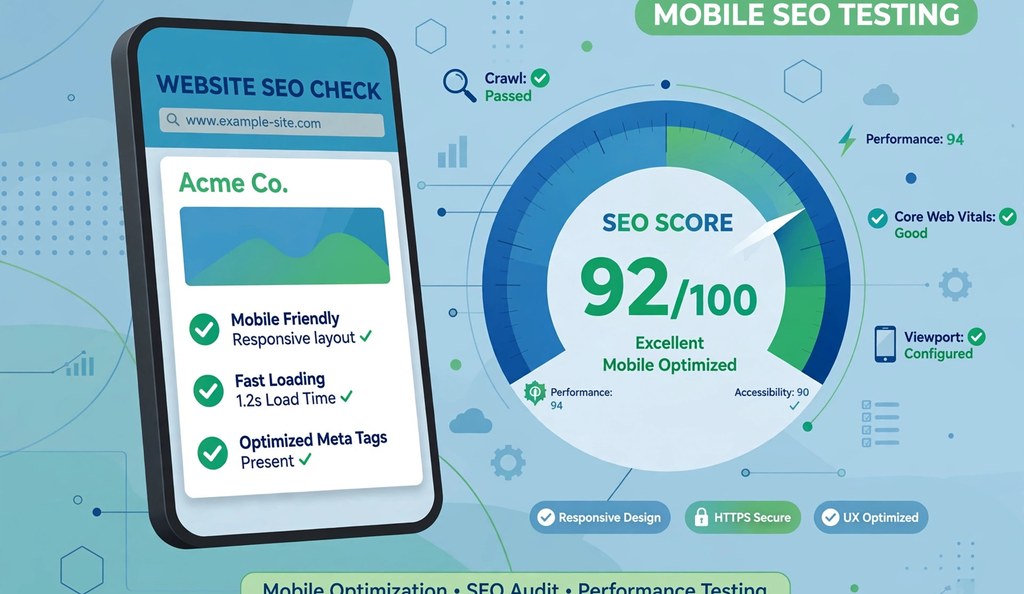
Crawlability, site speed, indexation, and structured data come first. Enterprise sites are often sprawling CMS builds with faceted navigation, duplicate URLs, and legacy redirects. Before content can rank, the technical foundation has to be sound. Start by running your key pages through a free website speed test and a SEO score check to see where you stand.
Keyword research for buying committees
B2B keyword research maps terms to personas and funnel stages: problem aware researchers, solution comparing evaluators, and vendor validating decision makers. A good provider delivers a keyword map tied to pipeline value, not just search volume, and identifies the comparison and alternative keywords (“your competitor alternatives”) that capture late stage buyers.
Content strategy and production
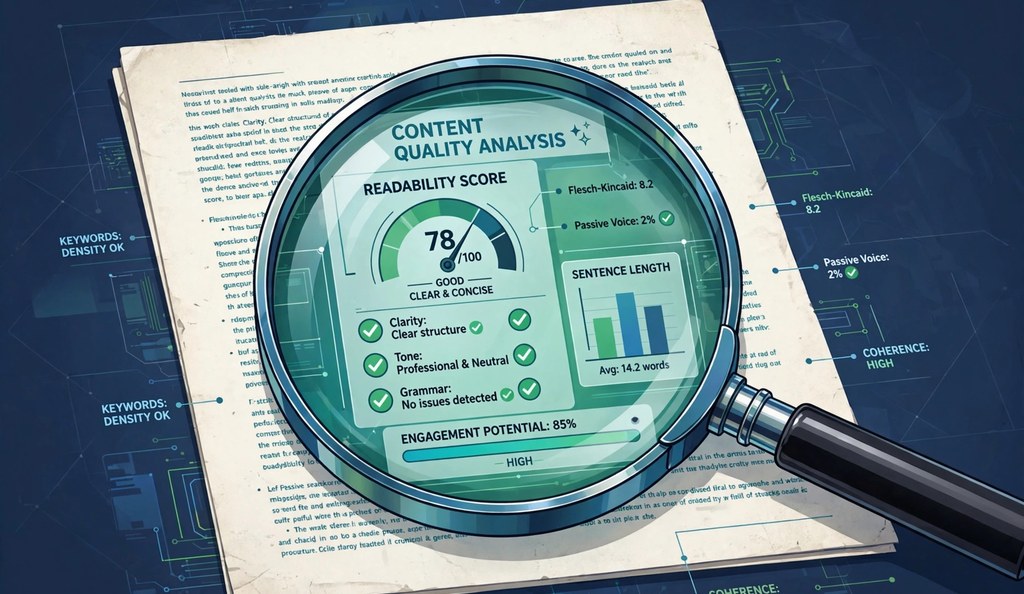
This is where B2B SEO is won or lost. The provider should plan content for every committee role: technical deep dives for practitioners, ROI frameworks for economic buyers, and implementation guides for champions selling internally. Every major page should pass an on-page SEO analyzer review before it ships.

Link building and digital PR
B2B links come from industry publications, analyst mentions, partner ecosystems, and original research that journalists cite. Guest posting on genuine industry sites remains effective when done editorially; our guest posting guide covers the vetting process. Avoid any provider whose link building is directory submissions and paid placements.
Conversion and pipeline reporting
Rankings without revenue attribution are vanity. B2B SEO reporting must connect organic traffic to marketing qualified leads, opportunities, and closed revenue in your CRM. If a provider reports only traffic and keyword positions, they are hiding from accountability.
In-House vs Agency: Which Fits
Hire in-house when SEO is central to your growth engine and you need daily iteration: large content operations, product led SEO, or highly technical sites. One strong in-house lead plus freelance specialists often beats a bloated team.
Hire an agency when you need senior strategy without the hiring overhead, when entering a new market fast, or when your team lacks specific expertise like digital PR or technical migrations. The best B2B SEO agencies act as an extension of your team, joining pipeline reviews and speaking the language of revenue.
Many companies do both: an agency for strategy and heavy lifting, an in-house marketer for coordination and institutional knowledge. Be honest about your internal capacity before you choose.
How to Vet a B2B SEO Agency
Ask for B2B specific case studies with pipeline numbers, not just traffic graphs. “We grew organic traffic 300 percent” means nothing; “we grew organic sourced pipeline 180 percent in 12 months” means everything. Push for the metrics that matter to your CFO.
Evaluate their discovery process. A good agency spends the first weeks interviewing your sales team, listening to call recordings, and mapping your buying committee before writing a word. A bad one sends a generic audit and a templated content calendar.
Check who does the work. Senior strategists should own your account, not hand it to juniors after the pitch. Ask to meet the actual team in the sales process, and get their involvement in writing.
Finally, run a check of your own SEO ranking baseline before signing, so you can hold the agency to measurable movement from day one.

B2B SEO Pricing: What to Expect
Realistic B2B SEO retainers start around $3,000 per month for focused engagements and run to $15,000+ for enterprise programs with heavy content and digital PR. Below $2,000 a month, you are buying activity, not outcomes; nobody senior is thinking about your account at that price.
Prefer retainers over project fees for ongoing SEO, but structure them around deliverables and pipeline targets, not hours. Month to month after an initial 90 day sprint is fair to both sides: enough time to show direction, no hostage contracts.
Red Flags in B2B SEO Proposals
Guaranteed rankings or timelines (“page one in 90 days”) are disqualifying. No provider controls Google or your competitors. Traffic only reporting without pipeline attribution means they plan to hide behind vanity metrics. No B2B references means you are their learning experiment. Secret methods (“proprietary AI system”) usually means nothing worth describing. And long lock in contracts with no performance clauses mean they expect you to want to leave.
Building a B2B SEO Content Calendar
A B2B content calendar is organized by buying committee, not by keyword volume. Start by listing every stakeholder role in your typical deal: the practitioner who feels the pain, the manager who owns the budget line, the technical evaluator who runs security review, and the executive who signs.
For each role, define their top five questions at each funnel stage. The practitioner asks “how do I solve X” (problem aware). The manager asks “which approach is best” (solution comparing). The executive asks “what is the ROI and risk” (vendor validating). Every content piece you plan should name its role and stage explicitly, or it does not get scheduled.
Cadence follows from this mapping. Most B2B teams do well with two substantial pieces per month plus quarterly updates to existing winners. Each quarter, audit which pieces actually influenced pipeline using CRM attribution, then double down on the winning formats and retire the rest. A calendar driven by revenue data beats one driven by publishing quotas.
Repurpose deliberately. One original research report becomes a gated asset, three blog posts, a webinar, and a dozen social posts. Buying committees consume content in different formats, so plan the derivatives at the briefing stage, not as an afterthought.
B2B SEO Tools Worth Paying For
You do not need a huge stack, but four categories are worth budget. A rank tracker with SERP feature detection (B2B SERPs are full of featured snippets and comparison boxes you need to win). A technical crawler for enterprise site audits. A content optimization tool that scores drafts against top ranking pages. And CRM attribution connecting organic touches to pipeline, without which you cannot prove ROI.
Before buying anything, exhaust the free tier: run your site through a free SEO score check, check SEO ranking for your money keywords, and audit top pages with the free on-page analyzer. Many teams discover their problems are execution gaps, not tool gaps, and fix them without spending a dollar.
What a Good B2B SEO Dashboard Includes
Ask to see a sample dashboard before you sign. It should open with pipeline metrics: organic sourced MQLs, SQLs, opportunities, and closed won revenue, trended month over month. Below that, leading indicators: keyword visibility for your buying committee terms, share of voice against named competitors, and content engagement (time on page, scroll depth) for decision stage pages.
The third section covers activity and health: technical issue counts trending down, content shipped, links earned with domain quality noted, and Core Web Vitals status. What it should never lead with is raw traffic. Traffic without pipeline context is how agencies hide weak strategy behind big numbers.
Insist on commentary, not just charts. Every report should explain what changed, why it changed, and what happens next. “Traffic up 12 percent” is data; “traffic up 12 percent because the comparison pages captured competitor alternative searches, and we are doubling down with three more” is management. You are paying for the second one.
When to Fire Your B2B SEO Agency
Even good engagements go stale. Fire fast if reporting stays traffic only after you have asked twice for pipeline attribution; that is a culture problem, not a learning curve. Fire if the same junior team runs your account for months while seniors only appear on renewal calls. Fire if strategy never evolves: the same content calendar in month nine as month two means nobody is learning from your data.
Do not fire over a single bad quarter. SEO has variance, especially in B2B where a few keywords drive everything. But do demand a written diagnosis and recovery plan within 30 days of any serious miss. Agencies that cannot explain a drop cannot fix it. Transition cleanly: secure all logins, analytics access, and content drafts before the termination date, and overlap the new provider by at least 30 days so nothing falls through the cracks.
Frequently Asked Questions
What are B2B SEO services?
B2B SEO services help business to business companies rank on Google for the searches their buyers perform during long, committee driven purchase processes. They typically include technical SEO, buying committee keyword research, expert level content, industry link building, and pipeline attributed reporting.
How is B2B SEO different from B2C SEO?
B2B SEO targets low volume, high value keywords, longer buying cycles, and multiple stakeholders, while B2C SEO chases higher volume consumer intent. B2B content must satisfy expert evaluators, and success is measured in pipeline and revenue, not just traffic.
How much do B2B SEO services cost?
Quality B2B SEO retainers typically run $3,000 to $15,000+ per month depending on scope and competition. Below $2,000 monthly you are buying junior level activity rather than senior strategy. Price should track deliverables and expected pipeline impact.
How long does B2B SEO take to show results?
Expect directional movement in 3 to 6 months and meaningful pipeline impact in 6 to 12 months. B2B keywords are competitive and buying cycles are long, so anyone promising faster results is selling fantasy.
Should I hire a B2B SEO agency or build in-house?
Hire an agency when you need senior expertise fast without hiring overhead; build in-house when SEO is core to your growth and needs daily iteration. Many companies combine both: agency strategy plus an in-house coordinator.
What should a B2B SEO proposal include?
Technical audit findings, a buying committee keyword map, a content plan by funnel stage, a link building approach, and pipeline attributed reporting. It should name the senior people doing the work and tie activity to revenue metrics, not just rankings.
How do you measure B2B SEO success?
By organic sourced pipeline: marketing qualified leads, sales opportunities, and closed revenue attributed to organic search in your CRM. Rankings and traffic are leading indicators; pipeline is the scoreboard.
Can a generalist SEO agency handle B2B?
Sometimes, but verify with B2B case studies showing pipeline results. B2C tactics like high volume thin content and consumer link schemes fail in B2B. The agency must understand committee buying and long sales cycles.
What is the most important B2B SEO ranking factor?
Topical authority demonstrated through genuinely expert content, supported by clean technical SEO and industry relevant links. In B2B, depth and credibility beat publishing velocity. One definitive guide outranks ten shallow posts.
Do I need original research for B2B SEO?
It is the highest leverage content investment in B2B. Original surveys, benchmarks, and data studies earn links from journalists and analysts that no outreach campaign can replicate, and they give your sales team proprietary proof points.
How often should we publish B2B content?
Quality beats cadence: two exceptional pieces a month outperform eight mediocre ones. Publish when you have something genuinely useful to say to your buying committee, and update existing winners quarterly.
What are common B2B SEO mistakes?
Targeting high volume irrelevant keywords, publishing thin content for expert buyers, reporting traffic instead of pipeline, and hiring on price instead of B2B proof. Each one wastes quarters; together they waste years.
Should B2B companies invest in link building?
Yes, but only editorial links from industry relevant sources: publications, analyst coverage, partner ecosystems, and research citations. Scaled directory and paid link schemes are ineffective in B2B and risky everywhere.
How should SEO work with account based marketing?
SEO feeds ABM with intelligence and air cover: identify target accounts researching your category through intent data, then make sure your content dominates the searches their committees run. Share keyword and content insights with the ABM team so ads, outreach, and organic reinforce the same narrative.
What input should the sales team give to SEO?
Objection logs, lost deal reasons, and the exact language prospects use. Sales hears how buyers describe problems daily; that vocabulary belongs in your keyword strategy and content briefs. Monthly SEO sales syncs are the cheapest keyword research you will ever do.
What is the difference between B2B SEO and B2B content marketing?
SEO is the distribution engine; content marketing is the fuel. Content marketing creates the assets (guides, research, webinars) while SEO makes them discoverable through search. In B2B they are inseparable: great content without SEO never gets found, and SEO without great content has nothing to rank.
How do I calculate B2B SEO ROI?
Divide organic sourced closed revenue by total SEO investment (agency fees plus internal costs) over the same period. Use a 12 month window to smooth out B2B sales cycles. A 3:1 ratio is healthy; below 2:1 after 12 months, revisit strategy or provider.
Conclusion
B2B SEO is a revenue discipline, not a traffic hobby. Choose providers on B2B pipeline proof, demand reporting tied to your CRM, and give the program the 6 to 12 months it needs to compound. Do that, and organic search becomes your most efficient enterprise pipeline channel. Start by benchmarking your baseline today, then hold every proposal against the framework in this guide. The companies winning B2B search are not doing anything mysterious; they are simply more thorough, more patient, and more honest about what works than everyone else.