White label SEO is a fulfillment model in which a specialist provider performs all SEO work on behalf of an agency, delivering it under the agency’s own brand so clients never see the third party. The agency owns the client relationship, sets its own pricing, and presents every audit, deliverable, and report as its own work, while the provider executes keyword research, technical fixes, content production, and link building behind the scenes. For agencies that want to sell SEO without recruiting, training, and managing an in-house team, white label SEO offers a proven path to new recurring revenue. This complete guide explains how the provider, agency, and client model works, which services white label providers typically cover, how pricing works, and how to choose a partner that genuinely delivers results.

How the Provider, Agency, and Client Model Works
White label SEO operates as a three-party arrangement with clearly separated roles. The provider is the fulfillment engine: a team of SEO specialists who perform audits, strategy, content production, outreach, and technical implementation. The agency is the face of the service: it sells SEO packages, manages the client relationship, and marks up the provider’s wholesale cost into retail pricing. The client is the end business receiving SEO services, and it interacts only with the agency’s brand at every stage.
A typical workflow runs like this. First, the agency onboards the client and collects access to the website, analytics, and business goals. The agency passes a structured brief to the provider, which completes an SEO audit and builds a prioritized action plan. The agency then presents that plan to the client in its own branded proposal template. Once approved, the provider executes the monthly work, from technical fixes to content publication and link acquisition, while the agency reviews quality and forwards branded reports. The client sees one brand throughout: yours.
Communication discipline is what makes this model work. Reputable providers never contact your clients directly, and most formalize this with a non-disclosure agreement. Day-to-day coordination usually happens through a white label dashboard, a shared project board, or a dedicated messaging channel with agreed turnaround times. Before any report reaches a client, the agency should review it for accuracy and tone, because the agency carries full responsibility for results. When agencies regularly check SEO ranking progress for their clients with independent tools, they catch fulfillment problems early and keep every stakeholder aligned on what success looks like.
Which Services Are Typically Included in White Label SEO
Most white label providers cover the full SEO lifecycle, and agencies can usually purchase services individually or as bundled monthly packages. A standard offering begins with a technical SEO audit: a deep review of crawlability, indexation, site speed, mobile usability, and site architecture. The audit produces a prioritized fix list that the provider can implement directly or hand to the client’s developer with clear specifications.
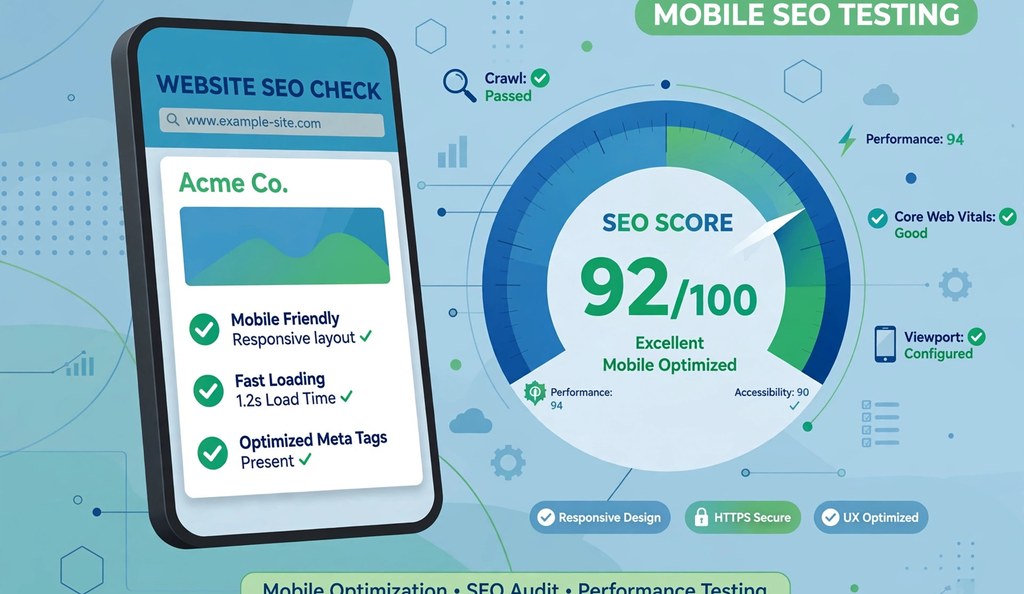
Keyword research and strategy come next. The provider maps search demand to the client’s pages, identifies gaps against competitors, and builds a content calendar around terms with realistic ranking potential. On-page optimization follows: titles, meta descriptions, headings, internal linking, and schema markup are tuned page by page. Many agencies run each key landing page through an seo page checker before and after optimization to verify that the fundamentals are genuinely in place.
Content production is often the largest line item, covering blog posts, service pages, and location pages written to rank for target queries. Link building and digital PR earn the authority signals that move competitive keywords, while local SEO covers Google Business Profile management, citations, and reviews for clients that serve specific areas. Finally, every engagement includes reporting: a branded monthly report that summarizes work completed, traffic movement, and ranking changes in language the client can understand.
White Label SEO vs. SEO Reseller vs. Outsourcing
These three terms are often used interchangeably, but they describe different commercial relationships, and choosing the wrong one causes friction. White label SEO means the provider’s identity is invisible: all deliverables, dashboards, and reports carry your agency’s branding, and the client never learns a third party exists. You control positioning, pricing, and the client conversation end to end.
SEO reselling, by contrast, means selling another company’s named product or service. Think of a software reseller relationship: the end product may carry the original vendor’s name, or the client may know the service comes from a partner. Reseller programs often come with fixed pricing and packaging, which gives the agency less control but requires less operational effort.
Outsourcing is the broadest term. Hiring a freelancer to write blog posts or a contractor to fix technical issues is outsourcing, but it is not necessarily white label: the contractor works under your direction, you manage quality directly, and there is no packaged, brandable service layer. Many agencies start with ad hoc outsourcing and graduate to a formal white label partnership once SEO becomes a core revenue line, because the white label model adds process, documentation, and client-ready reporting that raw freelancing does not provide.

White Label SEO Pricing Models Explained
White label providers generally sell in one of four ways. Monthly packages are the most common: the provider defines tiered plans (for example, starter, growth, and scale tiers) with fixed deliverables per month, and the agency resells them at a markup. Per-project pricing suits one-off engagements such as a technical audit, a site migration, or a content sprint, with a defined scope and a fixed fee.
Pay-per-deliverable pricing lets agencies buy individual units, such as a set number of optimized pages, articles, or links per month, which works well when client needs vary. Revenue share or hybrid models are rarer but do exist: the provider takes a percentage of the retail fee or a lower base fee plus performance bonuses. As a rough guide, wholesale white label costs typically run from a few hundred dollars per month for a basic local package to several thousand for competitive national campaigns, while agencies commonly retail those same packages at two to three times the wholesale cost. The spread between the two is the agency’s gross margin, and protecting it requires honest scoping: underpriced packages force providers to cut corners, which eventually shows up in results.
Watch for setup fees, minimum contract terms, and charges for extras such as additional content or expedited turnarounds. A transparent provider publishes a clear rate card or proposal template; vague pricing is a warning sign that costs will creep upward after you sign.
The Pros and Cons of White Label SEO for Agencies
The advantages explain why the model has become standard across the agency industry. Speed to market is the biggest: an agency can start selling SEO this month instead of spending six months hiring. Access to senior expertise follows, since established providers employ specialists in technical SEO, content strategy, and outreach that a small agency could not afford individually. Scalability is the third major benefit: taking on five new clients means ordering five more fulfillment slots, not five more salaries, and quiet months carry no fixed payroll cost.
The model also sharpens the agency’s commercial focus. Founders and account managers spend their time selling and retaining clients instead of managing production, which is usually the higher-value activity. Margins can be healthy when packages are priced with discipline, and recurring monthly retainers compound into predictable revenue.
The downsides are real and deserve honest treatment. Quality control sits with a team you do not directly manage, so a provider that cuts corners damages your reputation, not theirs. Dependency is the second risk: if the provider raises prices, degrades service, or closes, your clients feel the impact immediately. Differentiation can suffer too, since competitors may resell the same provider’s work, making your service harder to distinguish on deliverables alone. Finally, communication overhead adds up: every client question passes through you to the provider and back, which demands tight internal processes. Agencies that succeed with white label SEO treat provider management as a genuine operational discipline, not an afterthought.
How to Choose a White Label SEO Provider
Selecting a provider is the highest-leverage decision in this entire model, so evaluate candidates the way a client would evaluate you. Start with documented processes: a serious provider can show you its audit methodology, content briefs, outreach playbook, and reporting templates before you sign anything. Ask for sample deliverables, including a full audit and a monthly report, and judge them on clarity, depth, and honesty about timelines.
References and case studies matter more than sales claims. Speak to two or three current agency partners about responsiveness, consistency, and how the provider handles problems. Run a paid trial project, such as an audit or a single month of a small package, and verify the work independently: a full seo website check of delivered content and an independent seo website checker review of technical claims will tell you quickly whether the provider’s standards match its promises.
Confirm the commercial terms in writing: wholesale pricing, turnaround SLAs, revision policy, who owns the work product, and what happens to data and logins if the partnership ends. Insist on a mutual NDA that bars the provider from contacting your clients. Finally, assess communication quality: you need a named account manager, predictable response times, and a shared workspace where briefs, approvals, and questions live in one place. A provider that is hard to reach during the sales process will be harder to reach when a client is unhappy.
Red Flags That Signal a Bad Provider
Certain patterns reliably predict disappointment. Guaranteed rankings top the list: no honest provider promises position one, because rankings depend on competition and algorithm changes nobody controls. Secretive link building is another: if a provider will not disclose where links come from or what methods it uses, assume the worst. Extremely low prices signal automated or cut-rate work that risks penalties.
Other warning signs include no access to real reporting data (you should see actual analytics and Search Console figures, not just PDF summaries), long lock-in contracts with no performance clauses, refusal to do a trial, and vague answers about who actually does the work. Pay attention to how the provider talks about measurement: a partner that encourages you to independently check website seo ranking data and verify its reports is confident in its work, while one that discourages scrutiny usually has something to hide. Trust the evidence from the trial, not the pitch deck.
How to Sell White Label SEO to Your Clients
Selling fulfillment you do not personally execute requires confidence in the product and honesty in the positioning. Package the service clearly: name your tiers, list exactly what each includes per month, and tie deliverables to outcomes clients understand, such as ranking improvements, traffic growth, and leads. Vague “SEO services” proposals lose to specific ones.
Lead with an audit. A paid or discounted initial seo website check that surfaces real issues, from slow pages to thin content, creates natural demand for the monthly work that fixes them. When presenting findings, translate technical issues into business impact: a key service page that loads in six seconds costs the client mobile enquiries, and that framing sells better than a raw performance table.
Handle the in-house question with honest framing rather than evasion. Most agencies say something like: “We work with a dedicated team of SEO specialists who fulfill our campaigns, which means you get senior expertise without paying for our learning curve.” Clients care about results and accountability, not your org chart. Price for value and margin: anchor proposals against the cost of hiring internally or the revenue of new clients, and never discount so deeply that fulfillment quality collapses. Finally, set expectations about timelines up front; SEO compounds over months, and clients who understand that in week one stay for year two.
Reporting Under Your Own Brand
Reporting is where the white label arrangement either holds or breaks, so treat it as a product in its own right. Every report should carry your logo, your colors, and your narrative: what was done this month, what changed in the data, and what happens next. Raw data dumps erode trust; a short executive summary written in plain language builds it.
Establish a monthly measurement cadence. A consistent seo score check across technical health, content coverage, and authority gives clients a stable frame of reference, while ranking and traffic trends show momentum. When you check seo rankings for target keywords each month, present movement alongside the work that caused it, so clients connect deliverables to outcomes. Supplement provider reports with your own commentary and, where useful, independent spot checks. Agencies that narrate the numbers, celebrate wins early, and flag risks before clients notice them keep retainers far longer than agencies that simply forward PDFs.
Frequently Asked Questions
What does white label SEO mean?
White label SEO means a third-party provider performs SEO work that an agency sells under its own brand. The end client interacts only with the agency, while the provider handles audits, content, links, and reporting behind the scenes.
How much does white label SEO cost agencies?
Wholesale white label packages typically cost agencies a few hundred to a few thousand dollars per month per client, depending on scope and competition. Agencies then resell at a markup, commonly two to three times the wholesale cost, with the spread forming their margin.
How do agencies make money with white label SEO?
Agencies profit from the margin between the provider’s wholesale fee and the retail price charged to the client. Because fulfillment costs scale with client count rather than headcount, each additional retainer adds nearly pure margin once sales costs are covered.
Is white label SEO the same as SEO reselling?
The terms overlap, but white label SEO specifically means the work is delivered under the agency’s brand with the provider invisible. Reselling can involve selling another company’s named product, while white label keeps the agency as the sole visible brand.
Will my clients know I use a white label provider?
No, clients should never need to know, provided the provider honors its NDA and all deliverables carry your branding. Position the arrangement honestly as working with specialist fulfillment partners if a client ever asks directly.
What deliverables should I expect each month?
Expect a defined set of outputs per your package: completed technical fixes, published or optimized content, links earned, local citations or reviews work, and a branded monthly report. Every item should be verifiable, so you can confirm completion before reporting it to the client.
How long until clients see SEO results?
Most campaigns show early movement in three to four months and meaningful traction in six to twelve, depending on competition and starting position. Set this expectation in writing during onboarding to protect retention through the early months.
Do white label providers guarantee rankings?
Reputable providers do not guarantee specific rankings, and you should treat any such promise as a red flag. Honest providers commit to deliverables, processes, and transparent reporting rather than outcomes nobody can control.
Can I white label local SEO for clients?
Yes, most providers offer dedicated local packages covering Google Business Profile optimization, citations, reviews, and local content. Local campaigns often show faster visible wins, which makes them an excellent entry product for agencies.
What happens if a client cancels?
You simply stop ordering that client’s fulfillment slot, which is one of the model’s biggest advantages over in-house teams. Confirm in your provider agreement that you retain all logins, content, and data created for the client.
How do I verify the quality of a provider’s work?
Audit every deliverable before it reaches the client: review content for originality and depth, inspect link sources, and independently verify technical claims. Running periodic checks with an independent seo website checker keeps standards honest over time.
Is white label SEO ethical?
Yes, it is a standard B2B fulfillment arrangement, similar to how law firms use contract researchers or builders use subcontractors. The ethical obligation is to deliver genuine value and stand behind the work, regardless of who executes it.
What contract terms should I negotiate with a provider?
Negotiate clear SLAs, a mutual NDA, ownership of all work product and data, termination terms, and a defined revision policy. Avoid long lock-ins without performance clauses, and get pricing and turnaround commitments in writing.
Can a solo freelancer use white label SEO?
Absolutely; freelancers are some of the heaviest users of white label fulfillment. It lets a one-person business offer full-service SEO retainers and compete with larger agencies without hiring.
Conclusion
White label SEO gives agencies a practical way to sell a high-demand service without the cost and risk of building an in-house team, provided the provider is chosen with care and managed with discipline. Vet partners with paid trials, verify their work independently, package your services with clear deliverables, and report under your own brand with honesty about timelines. Done well, the model produces recurring revenue, scalable operations, and clients who stay for years. For background on the broader commercial concept behind unbranded resale, see the overview of the white-label product model on Wikipedia.