Search engine optimization services for small business improve a company’s visibility in organic search results through technical fixes, on-page optimization, local search signals, content production, and link building. A small business SEO service audits a website, corrects ranking barriers, and builds targeted content and links to increase qualified organic traffic. These services differ from enterprise SEO in scope and budget, but the underlying methods follow the same search engine ranking factors.
Google processes over 8.5 billion searches per day. A share of these searches carries local or transactional intent, which places small businesses in direct competition with national brands for the same keywords. SEO services close this gap by aligning a website’s technical structure, content, and authority signals with what search engines reward.
What Do Small Business SEO Services Include?
Small business SEO services include five core components: technical SEO, on-page optimization, local SEO, content production, and link building. Each component addresses a distinct ranking factor group used by search engines.
Technical SEO
Technical SEO corrects the elements that control how search engines crawl and index a website. This includes site speed, mobile responsiveness, XML sitemaps, robots.txt configuration, structured data (schema markup), canonical tags, and HTTPS security. A website with unresolved technical issues cannot rank consistently, regardless of content quality.
Core Web Vitals measure three specific performance metrics: Largest Contentful Paint (loading speed), Interaction to Next Paint (responsiveness), and Cumulative Layout Shift (visual stability). Google uses these three metrics as a ranking signal for page experience. A technical audit typically checks crawl errors in Google Search Console, duplicate title tags, broken internal links, orphan pages, and indexation status before any content or link work begins.
On-Page SEO
On-page SEO optimizes individual pages for target keywords. This includes title tags, meta descriptions, header tag hierarchy (H1 through H6), internal linking, image alt text, URL structure, and content structure. On-page SEO connects a page’s content to the search intent behind a specific query.
A well-optimized page places the target keyword in the title tag, the H1, and the first sentence of the body content. Header tags should follow a single hierarchy, with one H1 per page and H2 tags marking each major section. Internal links should use anchor text that matches the destination page’s title, which clarifies the link’s purpose to both users and search engines.
Local SEO
Local SEO targets customers searching within a defined geographic area. This includes Google Business Profile optimization, local citations, NAP (Name, Address, Phone) consistency across directories, location-specific landing pages, and customer review management. A business that serves a physical location depends on local SEO to appear in Google’s Local Pack, the map-based result block shown above organic listings.
Local citation accuracy matters because search engines cross-reference business data across multiple directories to confirm legitimacy. A mismatched phone number or address across even a small number of listings can reduce local ranking confidence. Review volume and recency also factor into local ranking, since Google’s local algorithm weighs review count, rating, and response activity.
Content Production
Content production creates pages, blog posts, and resources built around researched keywords and search intent. Content services typically include keyword research, content briefs, writing, editing, and publishing. A content strategy built on entity coverage (the people, products, locations, and concepts relevant to a business) supports rankings across a wider set of related queries, not a single keyword.
Working with an organic SEO expert at this stage helps small businesses map keyword clusters to buyer intent rather than chasing search volume alone. A content plan built around clusters covers a core topic page plus supporting pages that each target a related subtopic, linked back to the core page.
Link Building
Link building acquires backlinks from other websites to increase a site’s authority. Search engines treat backlinks as a trust signal: a link from a relevant, authoritative site indicates that a page provides value. Ethical link building methods include guest posting, digital PR, resource link outreach, and local business directory listings. Paid or manipulative link schemes violate Google’s Webmaster Guidelines and can trigger a manual penalty.
Link building for a small business typically starts with a smaller number of relevant, industry-specific placements rather than a high volume of low-quality links. Quality and topical relevance carry more ranking weight than raw link count.
Types of SEO Providers for Small Business
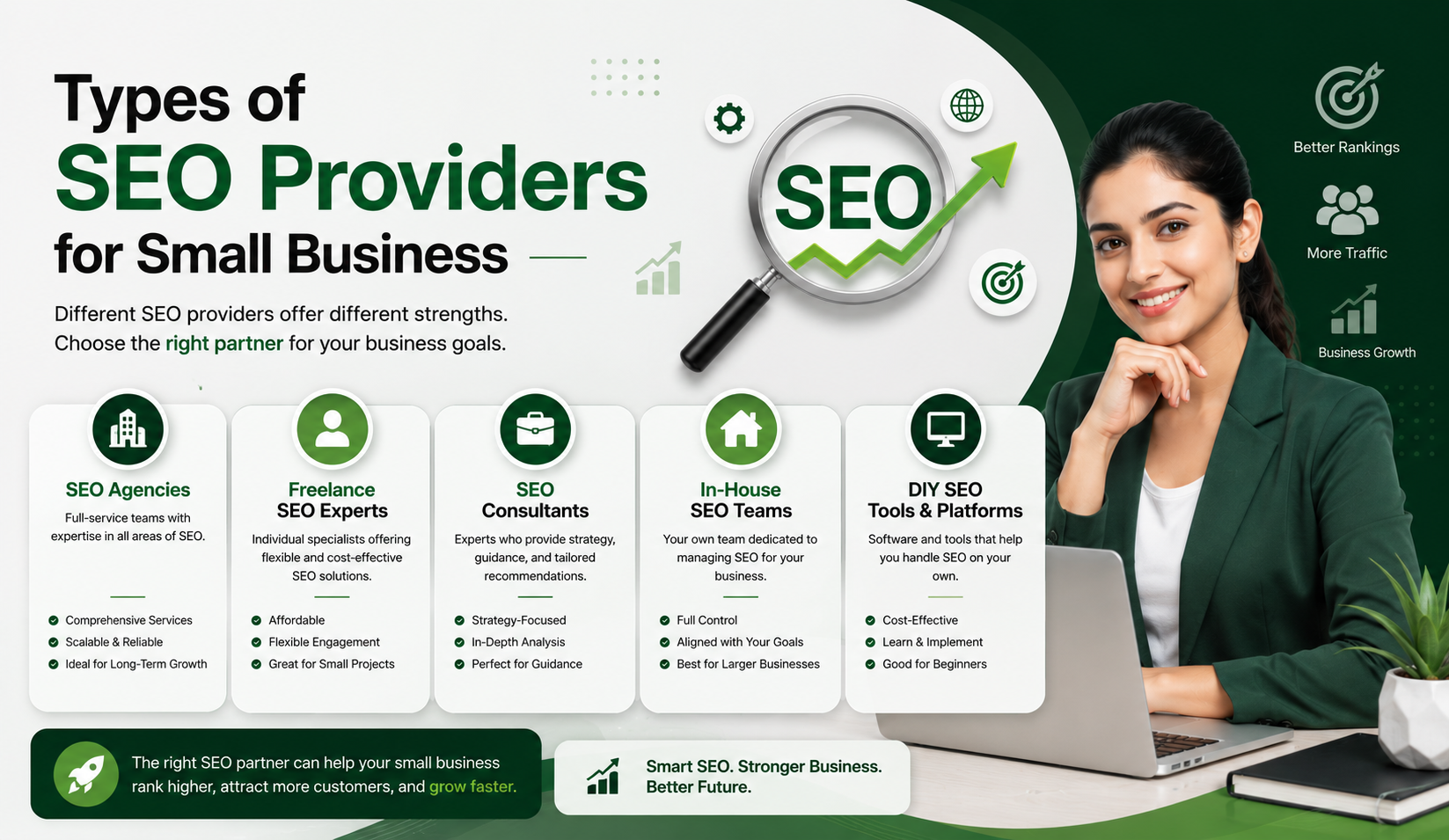
Small businesses generally choose between three provider types: freelance consultants, specialized boutique agencies, and full-service digital marketing agencies. A freelance consultant typically handles strategy and light execution at a lower cost. A boutique agency focuses narrowly on SEO and often provides deeper technical and content expertise. A full-service agency bundles SEO with web design, paid media, and other channels, which suits businesses that want one team managing multiple marketing functions.
Reviewing a list of top SEO agencies before choosing a provider helps a business compare service depth, industry specialization, and reporting practices across several options rather than evaluating a single proposal in isolation.
Small Business SEO Package Comparison
| Package Tier | Typical Scope | Best For |
|---|---|---|
| Foundation | Technical audit, Google Business Profile setup, core page optimization, monthly reporting | Businesses with a single location and a limited service area |
| Growth | Foundation scope plus ongoing content production, expanded keyword targeting, link building | Businesses expanding into new service areas or product lines |
| Competitive | Growth scope plus multi-location local SEO, advanced technical work, higher content volume | Businesses in crowded markets or with ecommerce catalogs |
Confirm three items before signing an SEO contract: who implements the recommended changes, what counts as included work versus added scope, and how reporting connects to leads, calls, or revenue rather than rankings alone.
How Much Do SEO Services Cost for a Small Business?
Small business SEO services typically range from a narrow, single-location local package to a broader multi-channel program, and the price scales with the number of locations, the competitiveness of the market, and whether content and link building are included. A provider that cannot explain deliverables for a specific price should be treated as a risk regardless of the number quoted.
Businesses working with a limited budget can compare affordable SEO packages to identify a scope that matches a smaller monthly spend without cutting technical or reporting work entirely. A lower-cost package should still define specific deliverables for each month rather than a vague activity list.
How to Choose an SEO Service for a Small Business

Match the SEO service to the business type first. A local service business needs Google Business Profile management, citation building, and location pages. An ecommerce store needs technical SEO, category page optimization, and product content. A B2B company needs content built around buyer research queries and service pages that match commercial intent.
Ask the provider these five questions before signing a contract:
- What specific work happens in the first 90 days?
- Who performs the technical, content, and link work?
- Which keywords and pages will be prioritized, and why?
- How does reporting connect SEO activity to leads, calls, or sales?
- What happens to site access and completed work if the contract ends?
A provider that guarantees a specific ranking position by a fixed date is not offering a credible service. Search engine algorithms weigh hundreds of factors, and no agency controls Google’s index directly.
SEO Services vs. Paid Search for Small Business
SEO builds organic visibility that continues generating traffic without a per-click cost, while paid search (PPC) produces immediate traffic tied to an active budget. SEO results typically compound over several months as content and authority accumulate. Paid search results stop the moment ad spend stops. Many small businesses run both channels together: paid search for immediate lead volume and SEO for durable, lower-cost-per-lead visibility over time.
A business testing a new service or location can use paid search to validate demand quickly, then shift budget toward SEO once the keyword and conversion data confirm which pages deserve long-term content investment.
Common Small Business SEO Mistakes
Small businesses lose search visibility through five recurring mistakes:
- Missing or incomplete Google Business Profile data. Incomplete profiles reduce local pack visibility.
- Duplicate or thin content across location pages. Search engines filter near-duplicate pages from rankings.
- Ignoring mobile page speed. Google indexes and ranks the mobile version of a page by default.
- Buying low-quality backlinks. Manipulative links carry penalty risk and rarely produce lasting authority.
- Treating SEO as a one-time project. Search engines re-crawl and re-rank pages continuously, so content and technical maintenance require ongoing work.
Each of these mistakes compounds over time. A site with thin content and missing technical fixes typically requires a longer recovery period than a site that avoided the issue from the start.
How SEO Timelines Work for Small Business
SEO timelines depend on site age, existing authority, and competition level in the target market. A newly launched website generally takes longer to rank than an established domain with existing backlinks and indexed content. The first phase of an SEO engagement usually focuses on technical fixes and Google Business Profile setup, since these changes can influence rankings faster than new content or link building. Content and link building phases typically show measurable movement over a longer period, since search engines need time to crawl new pages and evaluate new links.
Frequently Asked Questions
What are SEO services for small business?
SEO services for small business are technical, content, and authority-building services that improve a company’s visibility in organic search results. They typically include a website audit, keyword research, on-page optimization, local SEO, content production, and link building.
How long does small business SEO take to show results?
Most small businesses see measurable ranking movement within three to six months. Timelines vary based on site history, competition level, and the extent of technical issues present at the start of the engagement.
Is local SEO different from general SEO?
Yes, local SEO specifically targets geographic search intent through Google Business Profile optimization, citations, and location pages. General SEO addresses broader technical and content factors that apply regardless of location.
Can a small business do SEO without an agency?
Yes, a small business can perform basic SEO using free tools like Google Search Console and Google Business Profile. Technical audits, content strategy at scale, and link building typically require specialized tools and experience that most in-house teams lack.
What is the difference between on-page and off-page SEO?
On-page SEO optimizes elements within a website, while off-page SEO builds authority through external signals like backlinks. Both factor into how search engines rank a page.
Do small businesses need a content strategy for SEO?
Yes, a content strategy targets the keywords and questions a business’s customers search for, which builds topical relevance over time. Without content, a website has fewer indexed pages competing for organic traffic.
How do I measure SEO performance for a small business?
SEO performance is measured through organic traffic, keyword rankings, conversion rate, and lead or call volume attributed to organic search. Rankings alone do not confirm business impact; conversion data does.
Next Steps for Small Business SEO
A small business SEO service should start with a technical and content audit, followed by a prioritized action plan tied to the business’s specific market and goals. Compare providers on implementation ownership, reporting clarity, and evidence of past results rather than price alone.