Last updated: October 15, 2026
Most dental patients never scroll past the first few Google results. When someone in your area searches for “dentist near me” or “emergency dentist,” the clinics that appear at the top win the appointment, and everyone else waits. This guide explains exactly how dental SEO works so your practice can earn those top spots.
What is SEO for dentists? SEO for dentists is the practice of optimizing a dental clinic’s online presence so it ranks higher in local Google searches, attracting more appointment bookings from nearby patients. It focuses on Google Business Profile optimization, local keywords, service pages, patient reviews, citations, and a fast, mobile-friendly website. Clinics that invest in local SEO typically see more calls, more new-patient inquiries, and a steadier flow of bookings without depending on paid ads.
Unlike general SEO, dental SEO is almost entirely local. Nobody travels across the country for a routine checkup. Your competitors are the other clinics within a few miles, and Google decides which ones to show based on relevance, distance, and prominence. This guide walks through each of those factors in practical terms a busy clinic owner can actually act on.
Why Local SEO Matters for Dentists
Dental care is a local decision made under time pressure. A patient with a toothache searches, compares two or three nearby options, reads a handful of reviews, and calls the one that looks most trustworthy, often on a phone, in under ten minutes.
Paid advertising can buy visibility, but it stops the moment you stop paying. Local SEO builds an asset: a well-optimized profile and website keep generating calls month after month, and the cost per acquired patient falls over time. For independent clinics competing against large chains with bigger ad budgets, organic local visibility is one of the few level playing fields left. Patients also associate top Google rankings with credibility, so a clinic in the map pack with strong reviews starts every relationship with an advantage.
Google Business Profile Optimization
Your Google Business Profile (formerly Google My Business) is the single most important local SEO asset your clinic owns. It controls how you appear in the map pack, the local finder, and the knowledge panel, and for many dental searches it is the first thing patients see.
Claim and Verify Your Profile
If you have not claimed your profile, do it first. Search your clinic name on Google, click “Own this business,” and complete verification. Google usually verifies by postcard, phone, or video. Until verification is complete, your ability to edit and rank is limited.
Complete Every Field
Fill in your business name exactly as it appears on your signage and website. Choose the most specific primary category available, such as “Dentist” or “Cosmetic dentist,” and add secondary categories that apply, such as “Dental clinic,” “Emergency dental service,” or “Orthodontist” if you offer those services. Add your full address, local phone number, website URL, and accurate hours, including holiday hours.
Write a clear business description of 750 characters or fewer that mentions your main services and the area you serve. Avoid stuffing keywords unnaturally; describe what patients actually get. Add service listings with short descriptions for each treatment you offer: cleanings, fillings, root canals, crowns, implants, braces, whitening, and emergency care.
Add Photos and Posts Regularly
Profiles with photos get noticeably more engagement. Upload high-quality images of your reception, treatment rooms, equipment, and team (with patient consent where people appear). Add new photos every few weeks. Use the Posts feature to share offers, new services, or seasonal reminders such as back-to-school checkups. Fresh activity signals to Google that the business is active and current.
How long does it take for Google Business Profile changes to affect rankings? Most profile edits go live within a few days, but ranking improvements usually take several weeks. Google needs time to re-crawl, re-evaluate, and compare your profile against competitors. Treat optimization as an ongoing habit rather than a one-time fix.
Local Keywords and Service Pages
Your website needs to tell Google exactly which treatments you offer and where you offer them. The most effective structure for a dental site is a dedicated page for each major service, each optimized for a local keyword.
Target Service Plus Location Keywords
Patients search in predictable patterns: “teeth whitening [city],” “root canal [neighborhood],” “Invisalign dentist near me.” Build one page per high-value service with the location in the title tag, heading, URL, and body copy. A page titled “Dental Implants in [Your City]” will outperform a generic “Our Services” page every time.
Use keyword research to find what patients in your area actually type. Look at Google’s autocomplete suggestions, the “People also ask” box, and related searches at the bottom of results pages. These reflect real patient language, which often differs from clinical terminology. Patients search “tooth pain relief,” not “endodontic therapy.”
Build Location Pages for Each Area You Serve
If your clinic serves several neighborhoods or nearby towns, create a page for each. Each location page should have unique content: directions from that area, parking information, nearby landmarks, and testimonials from patients in that neighborhood. Duplicate the same text across location pages and swap only the place name, and Google will treat them as thin content.
Track which pages actually rank and adjust. When you check seo ranking for your target keywords each month, you will quickly see which service pages are gaining ground and which need stronger content, better internal links, or more reviews pointing at them.
Answer Real Patient Questions
Dental searches are full of questions: “does teeth whitening hurt,” “how long do dental implants last,” “is root canal painful.” Each of these deserves a clear, honest answer on your site, either within a service page or as a dedicated FAQ or blog post. Content that answers real questions earns featured snippets, builds trust, and converts anxious searchers into booked patients.

Online Reviews Strategy
Reviews are the backbone of dental local SEO. They influence the map pack ranking directly, and they are the first thing prospective patients read before calling. A clinic with 200 reviews averaging 4.8 stars will beat a competitor with 12 reviews almost every time, even if the competitor’s website is better.
Make Review Requests Systematic
Do not leave reviews to chance. Build a simple process: after a successful appointment, the front desk or a follow-up text asks the patient to leave a Google review, with a direct link. Timing matters. Ask when satisfaction is highest, which is usually right after treatment or the next day, not weeks later.
Keep the request short and personal. A text message from the clinic with the review link outperforms a generic email. Some clinics add a QR code at reception that opens the review page. Whatever the channel, make leaving a review take less than a minute.
Respond to Every Review
Reply to positive reviews with a brief, warm thank you that mentions the treatment if the patient did. Respond to negative reviews promptly, professionally, and without disclosing patient details. A thoughtful response to a complaint can impress future readers more than a perfect five-star record, because it shows how you handle problems.
Never offer incentives for positive reviews or ask staff to write fake ones. Google removes manipulated reviews, and getting caught damages trust far more than a few missing stars.
How many reviews does a dental clinic need? There is no fixed number, but most competitive local markets require at least 50 to 100 Google reviews before a clinic looks established. Beyond that, recency and response rate matter as much as the total count. A steady stream of new reviews beats a large but stale collection.
NAP Consistency and Citations
NAP stands for Name, Address, and Phone number. Google cross-checks these details across the web to confirm your clinic is real and located where you claim. Inconsistent listings confuse both Google and patients.
Audit your citations: the directories and sites where your clinic is listed. Start with the major ones (Google, Apple Maps, Bing Places, Yelp, Facebook) and dental-specific directories (healthgrades-style listings, local dental association directories). Your name, address, and phone number must match exactly on every listing, down to abbreviations and suite numbers.
Fix duplicates, which are common after address changes or rebrands. Claim unclaimed listings so competitors or data aggregators cannot edit them. Then build new citations on reputable local directories and chamber of commerce sites. A handful of high-quality, consistent citations beats hundreds of low-quality ones.
Your website itself is the anchor citation. Put your full NAP in the footer of every page and on a dedicated contact page with an embedded map. Structured data (schema markup for LocalBusiness and Dentist types) helps search engines parse this information reliably.
Website Essentials for Dental Clinics
Your website is where Google sends patients and where patients decide whether to call. A slow, confusing site wastes every other SEO effort.
Mobile First, Always
Most dental searches happen on phones. Your site must load quickly, display cleanly on small screens, and make calling effortless. Put a click-to-call button and an online booking option above the fold on every page. If a patient has to pinch, zoom, or hunt for your number, you have lost them.
Speed and Technical Health
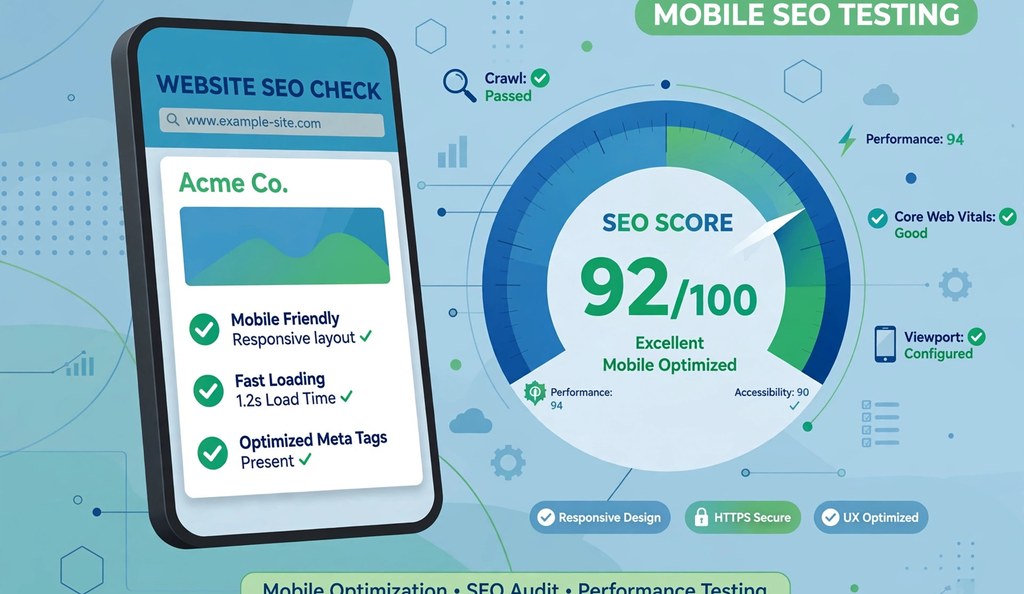
Compress images, enable caching, and keep page load times under three seconds on mobile connections. Fix broken links, secure the site with HTTPS, and make sure every page has a unique, descriptive title tag. Run a periodic seo score check on your key pages to catch technical issues such as missing meta descriptions, thin content, or slow-loading resources before they cost you rankings.
Online Booking and Clear Calls to Action
Patients book when the impulse strikes, often outside office hours. Online scheduling captures appointments that a phone-only clinic misses entirely. Every page should have one clear primary action: book an appointment or call the clinic. Secondary actions, such as downloading a new-patient form, support the main goal without competing with it.
Trust Signals on Every Page
Display your dentists’ credentials, before-and-after galleries (with consent), patient testimonials, accepted insurance plans, and any awards or certifications. Anxious patients choose the clinic that feels safest, and these signals do more persuading than any marketing copy.
Content Ideas for Dental Blogs
A blog gives your site fresh content, more pages for Google to rank, and material that answers the questions patients actually ask. The key is writing for patients, not for other dentists.
Strong topics include: treatment explainers in plain language (“What happens during a root canal, step by step”), cost and insurance guides, comparison posts (“Braces vs. clear aligners: which is right for you”), seasonal content (“Back-to-school dental checkup checklist”), and local angles (“Where to find emergency dental care in [city] on weekends”).
Each post should target one clear question, answer it thoroughly, and end with a call to action to book a consultation. One excellent article per month outperforms four shallow ones.
Video content multiplies the value. A short clip of the dentist explaining a procedure, embedded in the matching post, builds trust and can rank in both Google and YouTube search.
Social Signals and Local Visibility
Social media does not directly determine Google rankings, but it supports dental SEO in practical ways. An active Facebook or Instagram presence keeps your clinic visible, generates branded searches (patients Googling your clinic name, which strengthens local signals), and gives happy patients a place to tag and recommend you.
Focus on platforms where local patients actually are, which for most clinics means Facebook and Instagram, and increasingly TikTok for cosmetic and orthodontic content. Share smile transformations, team introductions, behind-the-scenes clips, and oral health tips. Real photos of your real team outperform polished stock imagery.
Encourage check-ins and tags. When patients tag your clinic, their friends see a trusted recommendation, and Google notices the brand mentions. Link your social profiles from your website and Google Business Profile so every channel reinforces the others.
Tracking Results: What to Measure
Dental SEO only works if you measure it. Vanity metrics such as total website visits mean little on their own; track the numbers that connect to booked appointments.
Monitor these monthly: Google Business Profile views, calls, and direction requests (all visible in the profile dashboard); organic search traffic and which keywords drive it; new-patient inquiries by source (ask every new patient how they found you); online bookings attributed to search; and your map pack position for your most valuable keywords. Track local pack positions over time, because the map pack drives the majority of dental clicks.
Set up call tracking with a dedicated number on your profile and website so you can attribute calls accurately. Connect Google Analytics and Search Console to see which queries bring patients and which pages convert. Review the data monthly and adjust: double down on what works, rewrite what does not.
How long does dental SEO take to show results? Most clinics see early movement within two to three months and meaningful new-patient growth within six to twelve months. Competitive metro areas take longer than small towns. SEO compounds, so the clinics that start now and stay consistent pull further ahead every year.
Common Dental SEO Mistakes to Avoid
The fastest way to waste a dental SEO budget is to repeat the mistakes struggling clinics make. Watch for these.
Keyword stuffing the business name. Adding “best dentist teeth whitening implants” to your Google Business Profile name violates Google’s guidelines and can trigger a suspension. Use your real business name only.
Buying reviews or links. Fake reviews get removed and can earn penalties. Paid link schemes risk manual actions. Earn both through genuine patient experience and real local relationships.
One generic services page. A single page listing every treatment ranks for nothing. Build dedicated, in-depth pages for each major service with local optimization.
Ignoring the website while chasing rankings. Traffic that lands on a slow, confusing site does not convert. Fix the site first, then drive traffic to it.
Setting and forgetting. Competitors optimize, Google updates its algorithm, and patient behavior shifts. Clinics that review their seo score check results and rankings quarterly stay ahead of clinics that optimized once and moved on.
Neglecting the domain itself. An older, well-maintained domain carries more trust with search engines than a brand-new one. You can check domain age for your own site and for competitors to understand part of why established clinics outrank newcomers. Our guide on whether domain age affects SEO explains how domain history fits into the bigger ranking picture, and the free domain age checker tool shows the registration details of any domain in seconds.
Frequently Asked Questions
What is SEO for dentists?
SEO for dentists is local search optimization that helps dental clinics rank higher on Google for nearby patient searches. It covers Google Business Profile optimization, local keywords, service pages, reviews, citations, and website improvements, all aimed at turning searches into booked appointments.
How much does dental SEO cost?
Costs vary widely, but clinics typically invest a fixed monthly amount comparable to a modest ad budget, with results compounding over time. Doing the fundamentals in-house (profile optimization, review requests, basic content) costs mainly time. Be cautious of anyone promising instant top rankings; legitimate SEO takes months.
How long does it take for dental SEO to work?
Expect early ranking movement in two to three months and meaningful patient growth in six to twelve months. Timelines depend on local competition, your starting point, and how consistently the work gets done.
Is SEO better than Google Ads for dentists?
They serve different roles: ads deliver immediate visibility while SEO builds lasting organic presence that keeps working after spending stops. Most successful clinics use both, with ads covering gaps while SEO compounds.
What is the most important dental SEO factor?
Your Google Business Profile combined with review quantity, quality, and recency is the strongest local ranking driver for dental searches. No amount of website tweaking compensates for a neglected profile.
How do I get more Google reviews for my dental clinic?
Ask every satisfied patient systematically, ideally by text message with a direct review link right after their appointment. Make it take under a minute, and respond to every review you receive.
Should my dental clinic have separate pages for each service?
Yes. Dedicated service pages with local optimization rank far better than a single generic services page. Build one thorough page per major treatment, each targeting service-plus-location keywords.
Does my dental website need a blog?
A blog helps significantly by answering patient questions, earning featured snippets, and giving Google fresh, relevant content to rank. One genuinely useful post per month beats frequent thin posts.
What is NAP consistency and why does it matter?
NAP consistency means your clinic’s name, address, and phone number match exactly across every online listing. Google uses this consistency to verify your business is legitimate and correctly located, which directly affects local rankings.
Can I do dental SEO myself or do I need an agency?
Clinic owners can handle the fundamentals: profile optimization, review generation, citation cleanup, and basic content. Agencies add value for technical SEO, competitive markets, and sustained content production. Either way, measure results monthly.
How do I rank in the Google map pack for dentist searches?
Optimize your Google Business Profile completely, earn a steady stream of positive reviews, keep NAP consistent, and build locally relevant website content. Proximity to the searcher also matters, which you cannot change, so maximize the factors you control.
What are the biggest dental SEO mistakes?
The most damaging mistakes are keyword-stuffing the business name, buying fake reviews or links, using one generic services page, and treating SEO as a one-time project. Each of these either triggers penalties or wastes the investment.
Does social media help dental SEO?
Social media does not directly change Google rankings, but it drives branded searches, patient tags, and referral traffic that strengthen local signals. An active local presence on Facebook and Instagram supports the overall strategy.
How do I track whether dental SEO is working?
Track profile calls and direction requests, organic keyword positions, new-patient inquiries by source, and online bookings monthly. Rising map pack visibility paired with more booked appointments is the clearest sign of success.
Conclusion
Dental SEO is not mysterious, but it is cumulative. The clinics that dominate local search are the ones that claimed and completed their Google Business Profile, asked every happy patient for a review, built one strong page per service, kept their listings consistent, and published genuinely helpful content month after month. None of these steps is difficult on its own; the advantage comes from doing all of them consistently while competitors do only some.
Start with the highest-impact actions: verify your profile, fix your NAP across major directories, and set up a review request process this week. Then build out service pages and a content calendar. Measure everything, adjust quarterly, and give the strategy time to compound. Patients are already searching for a dentist near them every day; make sure your clinic is the one they find. For background on how search engines evaluate websites as a whole, the Search engine optimization article on Wikipedia is a solid starting point.