Last updated: October 16, 2026
SEO services are professional services that help a website rank higher in search engine results. They typically cover technical audits, keyword research, on-page optimization, content creation, link building and performance tracking. Good providers tailor this work to your goals, while weak ones sell vague promises with no measurable results.
If you run a business or a website, you have probably heard that you “need SEO.” The advice is easy to give and much harder to act on, because the SEO services industry is crowded with providers ranging from genuine specialists to agencies that sell little more than buzzwords. This guide explains what SEO services actually include, the main types available, what fair pricing looks like, how to separate good providers from bad ones, and how to measure whether the money you spend is paying off. By the end, you will know exactly what to buy, what to avoid, and when it makes sense to handle SEO yourself.
What SEO Services Actually Include
At their core, SEO services are anything a provider does to improve your website’s visibility in organic (unpaid) search results. The work usually starts with an audit, moves into a plan of improvements, and continues with ongoing execution and reporting. Most legitimate providers include some combination of the following activities, and any quote you receive should say which of them are covered.
A technical audit comes first in almost every serious engagement. The provider crawls your site the way a search engine does and looks for problems that hold back rankings: slow pages, broken links, crawl errors, missing metadata, duplicate content, poor mobile usability and indexing issues. This diagnostic step matters because fixing technical foundations is often the fastest way to unlock growth that your content deserves.
Keyword research follows, and it is one of the most misunderstood parts of SEO services. It is not just about finding words with high search volume. Good research maps the actual language your potential customers use when they are ready to buy, questions they ask before they buy, and terms your competitors already rank for. This map then drives every other part of the strategy, from which pages to create to how existing pages should be rewritten.
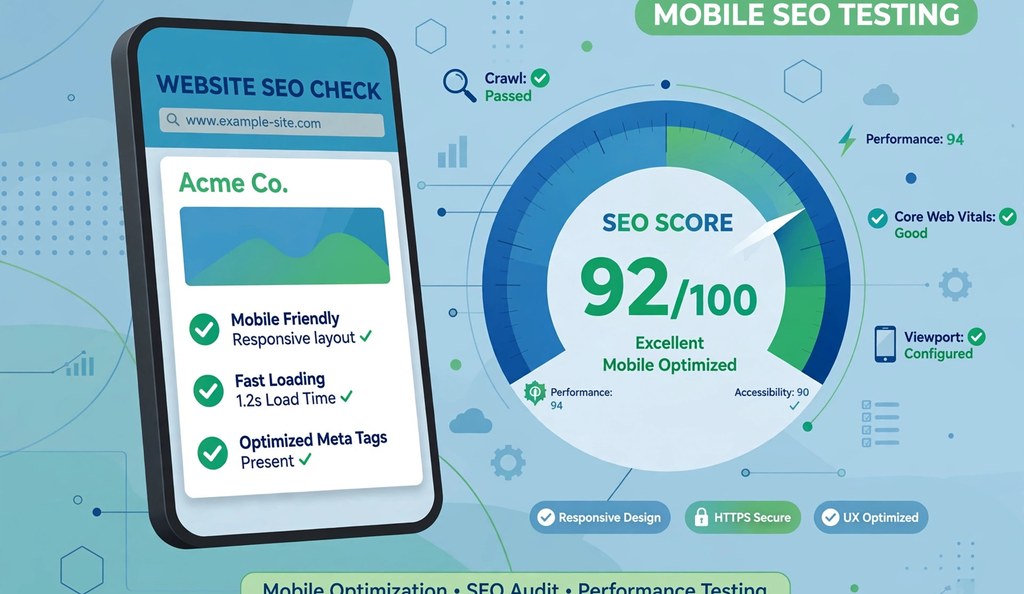
On-page optimization applies that research directly to your pages: titles, headings, meta descriptions, image alt text, internal links and content structure. It is detailed, page by page work, and it is where many small businesses see their first measurable wins. If you want a quick reality check on your current state before talking to any provider, run a free seo score check on your homepage so you have a baseline number to compare against later.
The Main Types of SEO Services
Not every business needs the same kind of help. SEO services providers typically package their work into a few distinct service types, and understanding them helps you buy only what fits your situation.
On-Page SEO
On-page SEO services improve the content and HTML source code of individual pages. The provider optimizes title tags, meta descriptions, header structure, image attributes, schema markup and the internal linking between your pages. They may also rewrite thin or outdated content so each page genuinely answers the search intent behind its target keyword. This is usually the starting point for any site, and for many small sites it delivers most of the available gains.
Technical SEO
Technical SEO services deal with everything under the hood: site speed, mobile friendliness, crawlability, indexation, canonical tags, XML sitemaps, robots.txt, structured data and Core Web Vitals. It often overlaps with web development, and the best technical SEO providers will either fix issues themselves or give your developer precise instructions. If a provider never looks at your site’s code or Search Console, they are not doing real SEO services, no matter what the invoice says.
Off-Page SEO and Link Building
Off-page SEO services focus on signals outside your own website, most importantly backlinks from other sites. Search engines treat quality links as votes of confidence, which is why earning them remains one of the strongest ranking factors. Honest link building means creating link-worthy content, digital PR, outreach to relevant sites and building genuine relationships. Dishonest link building means buying links, link schemes and automated spam, which can earn your site a penalty. This is one area where cheap providers do the most damage, so treat any promise of hundreds of links for a low price as a warning sign.
Local SEO
Local SEO services target businesses that serve customers in a specific area, such as restaurants, clinics, law firms and trades. The work centers on your Google Business Profile, local citations (consistent name, address and phone number across directories), reviews and location-specific content. For a local business, ranking in the map pack often matters more than ranking anywhere else, so a provider that understands local search is worth more than a generalist.
Content SEO
Content SEO services focus on the strategy and production of search-friendly content: topic clusters, editorial calendars, briefs, writing and updating articles. Search engines reward sites that cover a topic deeply and stay current, so many providers include regular content refreshes in their retainers. Content SEO is slow to start but compounds, which is why it suits businesses that can commit to a long-term program rather than a one-off project.
eCommerce SEO
eCommerce SEO services address the special problems of online stores: large product catalogs, duplicate product descriptions, faceted navigation that creates thousands of near-identical URLs, and category pages that need to rank for competitive commercial terms. If you run a store, make sure any provider you hire has real eCommerce experience, because the playbook is quite different from lead-generation sites.

What a Good SEO Service Engagement Looks Like
Knowing the types is only half the battle. You also need to know what the delivery of SEO services should feel like when a provider is doing the job properly. The pattern below is what honest, competent providers follow, and you can use it as a checklist when evaluating proposals.
It starts with discovery, not a pitch. A good provider asks about your business goals, your customers, your margins and what a new customer is worth to you. If the first conversation is entirely about deliverables and never about your revenue, the provider is selling activity, not outcomes.
Next comes a real audit with findings you can verify. You should receive a document or dashboard that shows what is broken, why it matters and how it will be fixed, in priority order. Vague statements like “your site needs more authority” without evidence are not an audit.
Then a strategy document connects the audit to your goals: which keywords and pages will be targeted, in what order, and why. The strategy should be specific enough that you could hand it to a different provider and they would understand what to do. If the strategy is a secret, the provider is protecting a weak product.
Execution follows in monthly or quarterly sprints, and you should see evidence of actual work: pages edited, content published, links earned, technical issues resolved. Finally, reporting shows movement against baseline metrics with honest commentary, not cherry-picked vanity numbers. A report that celebrates a traffic increase while hiding that conversions fell is a report designed to keep you paying, not to keep you informed.
How Much SEO Services Cost in 2026
Pricing for SEO services varies widely, and part of the confusion is deliberate. Here are the pricing models you will encounter and what is reasonable for each.
Monthly retainers are the most common model for ongoing SEO services. Small business retainers typically range from a few hundred to a few thousand dollars or pounds per month, depending on your market and the amount of work. Mid-size companies often pay more, and enterprise programs can run far higher. As a rough guide, retainers below the low hundreds per month rarely fund enough real work to matter, and the provider is likely doing automated or template-based tasks.
Project-based pricing suits one-off needs such as an audit, a site migration, or a defined set of page optimizations. Expect a fixed quote tied to clear deliverables and a timeline. This model works well when you want to test a provider before committing to a retainer.
Hourly consulting is useful for specific problems: a second opinion on a strategy, help with a migration, or training your in-house team. Hourly rates for experienced consultants are generally in the low to mid hundreds per hour. Cheap hourly SEO is rarely experienced SEO.
Be wary of guaranteed rankings and pricing tied to specific positions. No one can guarantee a ranking, and a provider that sells “page one for $X” is either targeting worthless keywords or using tactics that will hurt you. Legitimate SEO services are priced on work and expertise, not on promises no one can keep.
How to Choose an SEO Services Provider
This is where most buyers get stuck, so here is a practical framework. Use it every time you evaluate SEO services, and you will avoid the vast majority of bad hires.
Questions to Ask Before You Sign
Ask how they will measure success and what numbers they will report on. Ask what the first 90 days look like in concrete terms. Ask who will actually do the work: a senior specialist or a junior following a checklist. Ask for examples of past work with businesses like yours, including what went wrong and what they learned. Ask how they build links, and press for specifics. Ask what happens if you cancel: do you keep the content, the links, the data. The quality of the answers tells you more than any case study.
Red Flags That Should Make You Walk Away
Walk away from any provider that guarantees rankings or promises results within an impossibly short timeframe. Walk away from providers who cannot explain what they will actually do each month. Walk away from anyone who wants you to buy thousands of backlinks, who hides their methods, who sends reports you cannot understand, or who pressures you to sign a long contract before showing any value. Also be cautious of providers whose own website does not rank for anything relevant: if they cannot market themselves, skepticism is healthy.
What to Look For Instead
Look for providers who talk about your business metrics, not just rankings. Look for transparent processes, clear deliverables, and reporting you can verify independently. Look for specialization that matches your needs: local SEO for a local business, eCommerce experience for a store. Look for a realistic timeline: meaningful results from SEO services typically take three to six months, and anyone honest will say so.
DIY SEO vs Hiring a Provider
Not everyone needs to hire. If you run a small site with a simple structure, you can handle a surprising amount of SEO services work yourself with free tools and a few hours a month. The basics: make sure your site is crawlable and fast, write genuinely helpful content around what your customers search for, keep your Google Business Profile updated if you are local, and earn links by being worth linking to. A free seo website checker can help you check seo ranking positions before and after your changes, so you know what your effort actually produced.
Hire when the work exceeds your time or expertise: technical problems you cannot diagnose, a competitive market where you need a real strategy, or content needs beyond what you can produce. Also hire when you need accountability and reporting discipline that you know you will not maintain alone.
A hybrid approach works well for many businesses: pay for a one-off audit and strategy, then execute the recommendations yourself or with a freelancer. This gives you expert direction without the ongoing retainer, and it is a smart first step if you are not sure what level of SEO services you need.
How to Measure the Results of SEO Services
The entire point of paying for SEO services is return on investment, so measurement is not optional. Here is how to keep score honestly.
Start with a baseline before any work begins. Record your current organic traffic, keyword rankings, conversion rate and revenue from organic search. Without a baseline, every report is just numbers in a vacuum. Free tools let you check website seo ranking for your main keywords and run an seo website check to grade your pages, and you can repeat these checks monthly to track progress over time.
Track leading indicators in the early months: technical issues fixed, pages optimized, content published, links earned, and rankings movement for target keywords. These show that real work is happening before traffic moves. From month three onward, expect organic traffic and then conversions to follow if the strategy is sound.
Judge the provider on business metrics, not just rankings. A keyword that ranks first but brings no buyers is a vanity win. Track organic conversions, revenue, cost per acquisition and the trend of your blended customer acquisition cost. If the provider resists tying their work to revenue, ask why.
Finally, keep your own records independent of the provider’s reports. Your analytics, your Search Console data and your own monthly seo page checker snapshots mean you can verify progress even if the relationship ends badly. That independence is cheap insurance.

SEO Services and Domain Age: What Actually Matters
A common question when people start researching SEO services is whether the age of a domain gives a ranking advantage. The honest answer is that domain age by itself is a weak signal. What looks like an “age bonus” is usually the effect of years of content, links and trust that older sites have accumulated. A new domain with excellent SEO fundamentals can outrank an old, neglected one.
If you are curious about your own domain, you can check domain age in seconds, and it is worth reading about does domain age affect seo before you let a provider use age as an excuse for slow progress. If an agency tells you that your site cannot rank because the domain is too young, that is a red flag: plenty of young domains rank well when the SEO work is done properly.
Frequently Asked Questions About SEO Services
What are SEO services?
SEO services are professional services that improve a website’s visibility in organic search results. They typically include technical audits, keyword research, on-page optimization, content creation, link building and performance reporting, all aimed at increasing qualified traffic from search engines.
How much do SEO services cost per month?
Monthly retainers for SEO services typically range from a few hundred to a few thousand per month for small and mid-size businesses, depending on competition and scope. Very cheap retainers rarely fund enough real work to matter, while enterprise programs cost much more.
How long does it take for SEO services to work?
Most businesses see early movement in three to six months, with stronger results building over six to twelve months. Timelines depend on competition, site history and the amount of work being done. Anyone promising page-one rankings in weeks is not being honest.
Are SEO services worth it for small businesses?
They can be, if the provider targets keywords with real buying intent and the lifetime value of a customer justifies the cost. Local businesses often see the best returns, because local SEO is less competitive than national search and the leads convert well.
What is the difference between SEO services and PPC?
SEO services earn organic traffic that continues after you stop paying, while PPC (pay-per-click) buys ads that stop the moment your budget runs out. SEO is slower but compounds; PPC is instant but rented. Many businesses use both.
Can I do SEO myself instead of hiring SEO services?
Yes, the basics are very doable: fix technical issues, create helpful content, optimize your pages and build genuine links. Hire when the work exceeds your time or expertise, or when you operate in a competitive market that demands a professional strategy.
What should be included in an SEO services contract?
A clear scope of work, specific deliverables, a timeline, how results will be measured and reported, who owns the content and data created, and fair cancellation terms. Avoid long lock-in contracts with vague deliverables.
How do I know if my SEO provider is doing good work?
Look for concrete evidence each month: issues fixed, pages optimized, content published, links earned and movement in rankings and organic conversions. Keep your own independent records with free checkers so you can verify progress yourself.
What are the biggest red flags in SEO services?
Guaranteed rankings, secret methods, bulk backlink packages, unexplainable reports, pressure to sign long contracts and a provider whose own site does not rank. Any one of these is reason to keep looking.
Do SEO services include content writing?
Many do, either directly or through content SEO packages that cover strategy, briefs and writing. If your provider does not write content, make sure someone is responsible for it, because content is usually what the rest of the SEO work depends on.
What is local SEO and do I need it?
Local SEO services help businesses rank for searches in their geographic area, centered on the Google Business Profile, reviews and local citations. If customers visit you in person or you serve a defined area, local SEO is usually your highest-return SEO investment.
Can SEO services get my site penalized?
Honest SEO services will not. Penalties come from manipulative tactics such as bought links, spammy content and cloaking. This is why the provider’s methods matter more than their promises: ask how they build links and walk away from anything that sounds like a shortcut.
Should I choose a freelancer or an agency for SEO services?
Freelancers are often cheaper and more specialized; agencies offer broader teams and more capacity. For a small business, a skilled freelancer or boutique agency usually gives better value than a large agency that assigns your account to a junior.
What happens if I stop paying for SEO services?
You keep the rankings, content and links you earned, though competitors may catch up over time if you stop maintaining the site. Make sure your contract states clearly that all work created during the engagement belongs to you.
Conclusion: Buying SEO Services Without Getting Burned
The SEO services industry rewards informed buyers. Know what the work should include, insist on transparency, measure results against your own baseline, and give the strategy time to work. The providers worth hiring will welcome your questions, explain their methods in plain language and tie their work to your revenue. The ones to avoid will rush you, mystify you and sell you guarantees no one can keep. Start small, verify everything, and scale up only when the numbers justify it. If you want to understand the foundations better, the Wikipedia article on search engine optimization is a solid, neutral reference for the core concepts every provider should be building on.