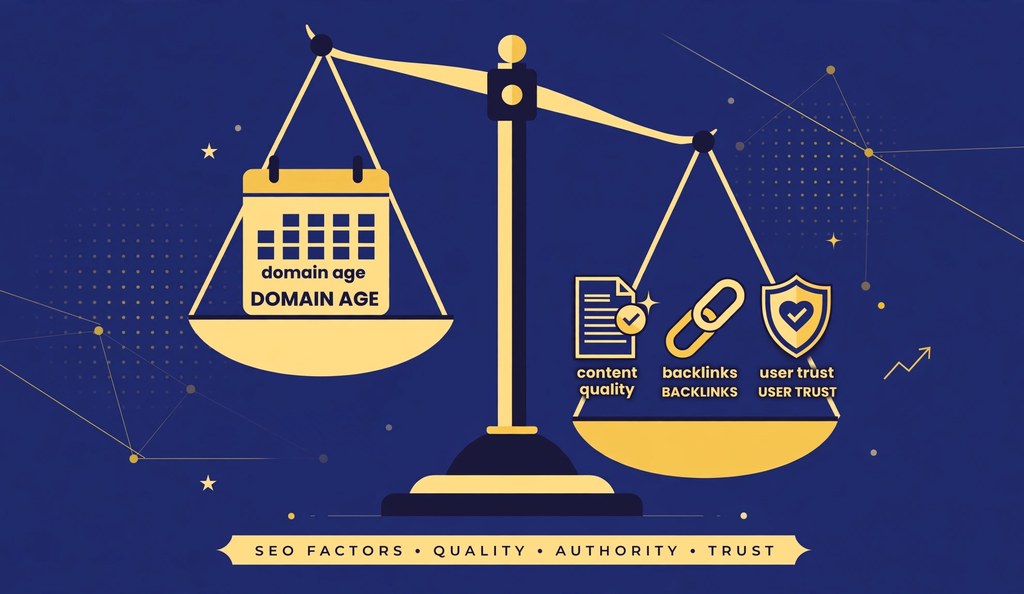
Does domain age affect SEO? No. Domain age is not a direct Google ranking factor. Google’s John Mueller has stated plainly that domain age helps nothing by itself. Older domains often rank higher because they had more time to earn backlinks, publish content, and build brand recognition, not because of their registration date. As of October 2026, every credible study and Google statement points to the same verdict: history matters, age alone does not.
Featured Snippet: Domain age does not directly affect SEO rankings. Google confirms age alone is not a ranking factor. Older sites rank well because of accumulated backlinks, content depth, and brand trust earned over time.
What Google Says About Domain Age
Google says domain age is not a ranking factor. John Mueller, Google Search Advocate, has answered this question directly: domain age helps nothing on its own. Former head of webspam Matt Cutts gave the same answer years earlier. Google’s Search Central documentation lists no age based signal among its ranking systems.
This position has stayed consistent for over a decade. Google evaluates what a domain earned during its lifetime: the quality of its pages, the strength of its backlink profile, and how users respond to its content. The registration date itself carries no weight in that evaluation.
Google does track domain history for abuse. The March 2024 core update specifically targeted expired domain abuse, where buyers repurpose old domains with unrelated low value content to exploit residual reputation. Google called this a spam policy violation, not a ranking bonus.
Why Old Domains Often Rank Higher
Old domains rank higher because of what age correlates with, not age itself. Time gives domains more chances to accumulate the signals Google actually measures.
| What People See | What Actually Causes It |
|---|---|
| 10 year old domain ranks #1 | 10 years of earned backlinks from reputable sites |
| Old site survives every update | Deep content library covering the topic fully |
| Aged domain resists new competitors | Brand searches and returning visitors built over years |
| Old pages rank with thin content | Historical authority and internal link equity |
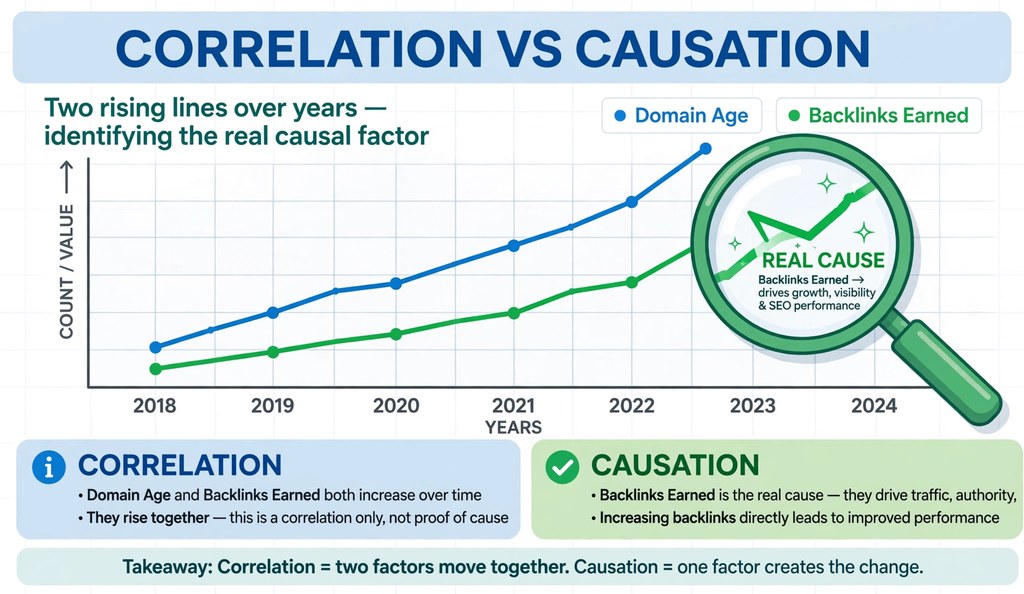
Correlation confuses the picture. Analysts see old domains at the top of results and credit the years. The years merely provided the time to build links, publish hundreds of pages, refine technical SEO, and earn user trust. A new domain that replicates those assets can outrank an older one that neglected them.
Think of it as compound interest without the principal mattering. The interest comes from deposits: content, links, and engagement. Age only measures how long the account stayed open.
5 Things That Matter More Than Domain Age
Content quality, backlinks, technical health, user signals, and brand strength decide rankings. Domain age influences none of them directly.
1. Content Quality and Intent Match
Google’s helpful content systems and Search Quality Rater Guidelines reward pages that demonstrate experience, expertise, authoritativeness, and trustworthiness. A page that answers the query completely outranks an older page that answers it thinly. Run new pages through a content quality checker before publishing.
2. Backlink Profile Strength
Links from reputable, topically relevant sites remain among the strongest ranking signals. Older domains usually hold more of them because they had more years to earn them. A new domain with fifty excellent links beats a ten year old domain with five hundred spammy ones. Quality decides, not count or age.
3. Technical SEO Health
Crawlability, indexation, page speed, and mobile usability gate every ranking. A technically broken old domain loses to a clean new one. Audit pages with an on-page SEO analyzer and fix titles, headings, and meta issues first.
4. User Behavior Signals
Click through rates, dwell time, and return visits tell Google whether searchers value a result. An old domain with high bounce rates slides down. A new domain that satisfies intent climbs. Titles and descriptions control the first click, so preview them with a SERP snippet preview tool.
5. Brand Recognition
Branded searches, direct traffic, and mentions build an entity Google trusts. Brands take years to build, which is why age correlates with strength. But focused new brands in narrow niches build recognition faster than generic old sites coasting on history.
When Domain Age Can Help Indirectly
Age helps indirectly through head starts, not through scoring bonuses. Four indirect advantages exist.
Established domains skip the evaluation period new sites face. Google tests new content cautiously, watching quality signals before ranking it confidently. Older domains with clean histories pass this phase faster because their track record is already known.
Existing backlinks transfer with the domain. Buying an aged domain with a clean, relevant link profile inherits years of link building overnight. Verify the profile carefully, because toxic links transfer just as easily.
User trust comes easier. Visitors, partners, and journalists take a fifteen year old domain more seriously than a fifteen day old one. That trust converts into more natural links and mentions.
Email and outreach work better. Aged domains with clean sending histories reach inboxes reliably, which improves link outreach and customer communication.
When an Old Domain Hurts You
An old domain with a dirty history performs worse than a fresh one. Age amplifies bad history instead of erasing it.
Spam history poisons the asset. Previous owners may have run link schemes, hosted malware, or published spun content. Google remembers. Manual penalties and algorithmic distrust attach to the domain, not the owner.
Drops reset equity. A domain that expired and sat empty loses most accumulated signals on re-registration. The new creation date exposes the gap. Check any aged prospect with a domain age checker and compare against Wayback Machine snapshots.
Topic shifts waste authority. A domain that spent eight years as a cooking blog and one year as a crypto casino carries cooking authority into a crypto fight. Google re-evaluates topical relevance from scratch.
Trademark conflicts create legal risk. Old domains sometimes carry abandoned brand disputes. Age provides no legal shield.
New Domain? How to Outrank Older Sites
New domains win by building assets faster than old domains maintain theirs. Follow this sequence.
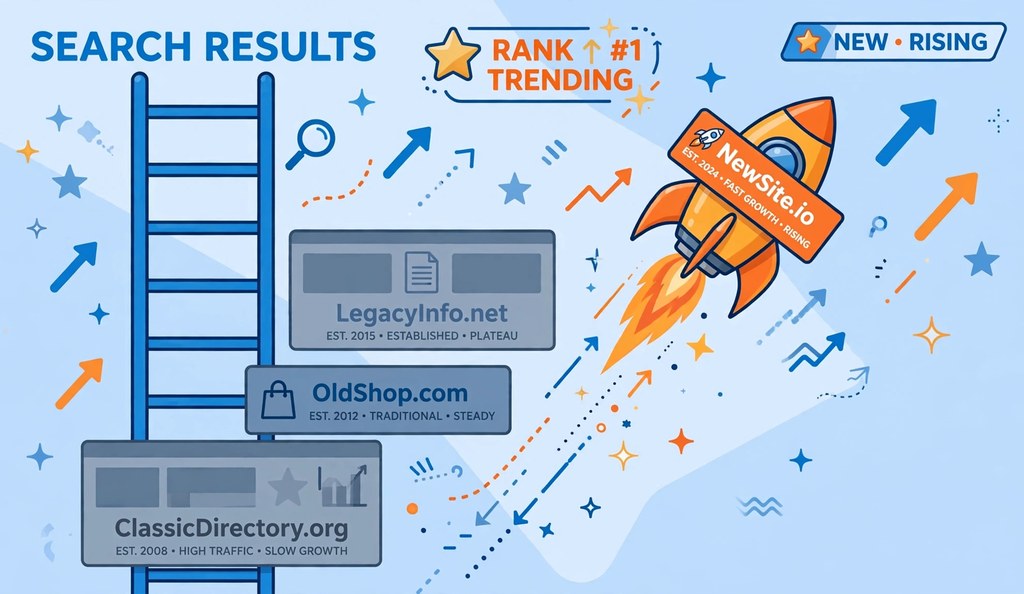
- Publish the best answer for each target query. Depth beats history when intent match is clear.
- Fix technical SEO completely in week one. Clean sites earn Google’s confidence faster.
- Build topical authority with a tight content cluster instead of scattered posts.
- Earn links through original data, tools, and outreach. Ten great links beat a thousand directory submissions.
- Target long tail keywords first. New domains rank for specific queries within weeks while building toward competitive terms.
- Track rankings monthly with Search Console and expand what works.
Many pages earn meaningful traffic within three to six months when fundamentals are right. Domain age is a minor variable beside these actions. Our guide on how to check SEO ranking shows how to monitor the climb.
Frequently Asked Questions
Does domain age affect SEO rankings directly?
No. Google states that domain age is not a direct ranking factor. History, backlinks, and content quality drive rankings.
Why do older websites rank higher on Google?
They had more time to earn backlinks, publish content, and build brands. Those assets cause the rankings, not the registration date.
Is there a Google sandbox for new domains?
No formal sandbox exists. Google evaluates new sites cautiously at first, which looks like a penalty but is normal quality assessment.
Should I buy an aged domain for SEO?
Only with a clean, relevant history. Verify the backlink profile, check Wayback snapshots, and confirm no penalties before paying.
Does registering a domain for 10 years help SEO?
No ranking benefit exists. Long registration prevents accidental loss, which is good business practice, not an SEO tactic.
Can a new domain outrank a 10 year old domain?
Yes. Better content, stronger links, and cleaner technical SEO beat age whenever the older site coasts on history.
Does domain age affect Domain Authority?
Not directly. Moz’s Domain Authority predicts ranking strength from backlinks. Age correlates with more links but causes nothing itself.
Do expired domains keep their SEO value?
Rarely. Drops reset most equity, and Google’s expired domain abuse policy targets repurposed old domains with unrelated content.
How long until a new domain ranks?
Long tail keywords can rank within weeks. Competitive terms take three to twelve months. Content quality and links set the pace.
Does WHOIS privacy hurt SEO?
No. Private registration is standard practice and Google confirms it does not affect rankings by itself.
What matters more than domain age?
Content quality, backlink strength, technical health, user signals, and brand recognition. These five decide positions.
How do I check a domain’s age before buying?
Use a free domain age checker for the creation date. Then review Wayback history and backlinks for the full picture.
Will Google penalize my old domain’s spammy past?
Yes, if the history includes spam or manipulation. Penalties and distrust attach to the domain across ownership changes.
Conclusion
Domain age does not directly affect SEO. Google confirms the registration date carries no ranking weight. Older domains rank well because years gave them time to accumulate backlinks, content, brand trust, and technical refinement. Those assets, not the calendar, decide positions. New domains compete by building the same assets faster: better content, cleaner technical SEO, and earned links. Check any domain’s history before buying, focus effort on the five factors that actually move rankings, and judge progress on traffic and conversions rather than birthdays.
For background on how ranking systems evolved, see this overview of search engine optimization.