AICOT is an EU-funded research project building an AI-driven cyber defense platform for operational technology in critical infrastructure. Funded by the Digital Europe Programme under grant agreement 101249826, it develops AI-based anomaly detection, OT protocol analysis, and secure threat intelligence sharing to protect energy, water, transport, and manufacturing systems from cyberattacks.
What Is the AICOT Project?
AICOT stands for “AI-Driven Cyber Defense Platform for Operational Technology Environments in Critical Infrastructure.” It is a collaborative European research effort that uses artificial intelligence to detect and respond to cyber threats against the computer systems that run physical industrial processes. The project is financed through the European Union’s Digital Europe Programme under grant agreement No. 101249826, and its official home on the web is aicotproject.eu.
The idea behind AICOT is simple to state but hard to execute: the factories, power grids, water plants, and transport networks that modern life depends on are controlled by computers, and those computers are increasingly connected, which makes them targets. Conventional IT security tools were designed for office networks, not for the delicate machinery of a turbine hall or a chemical plant. AICOT aims to close that gap with AI techniques built specifically for operational technology environments.
The Full Name and the Funding
The project’s full official title is “AI-Driven Cyber Defense Platform for Operational Technology Environments in Critical Infrastructure.” It receives funding from the European Union’s Digital Europe Programme (DIGITAL), a funding instrument that supports the deployment of digital technologies across the EU. The grant agreement number, 101249826, is the project’s unique identifier in EU funding records. Views and opinions expressed by the project are those of its authors and do not necessarily reflect those of the European Union or the European Cybersecurity Competence Centre, which is standard language for EU-funded work.
Because AICOT is an ongoing research effort, the safest place to check its current status, partners, and results is the official project website. Research projects evolve as they pass milestones, and details such as pilot sites and validation timelines are typically published there as they are confirmed. Rather than trusting secondhand summaries, readers who need authoritative information should go straight to aicotproject.eu.
What Problem AICOT Is Trying to Solve
Operational technology, usually shortened to OT, covers the hardware and software that monitors and controls physical equipment: the programmable logic controllers inside a factory, the SCADA systems that supervise a power grid, and the sensors and actuators that open valves and move conveyors. For decades these systems ran on isolated networks, hidden from the internet and from attackers. That isolation is disappearing as industries connect their plants to corporate networks and cloud services for efficiency and remote monitoring.
Every new connection is a potential entry point. Attackers have learned that disrupting a water treatment plant or a transmission grid creates pressure far beyond a single company. Yet the classic response, shutting everything down at the first sign of trouble, is often unacceptable in OT: stopping a turbine or a refinery process can cause physical damage or safety hazards. Security for OT therefore has to detect threats precisely, distinguish attacks from normal process behavior, and respond without breaking the physical process. That is the niche AICOT is designed to fill.
How AICOT Protects Operational Technology
The AICOT platform combines several layers of defense into one approach tailored for industrial environments. It is not a single product you install like antivirus software. It is a research platform that integrates AI detection methods, OT-aware network analysis, and structured ways of sharing threat knowledge across organizations. Below are the building blocks that define the project.
AI-Driven Anomaly Detection
At the heart of the platform is machine learning that learns what normal looks like inside an industrial network and then flags behavior that deviates from it. In an office network, normal changes constantly as people browse, stream, and download. In an OT network, traffic is highly repetitive: the same sensors report the same readings on predictable schedules, and the same controllers exchange the same commands. That regularity is an advantage for AI, because genuine anomalies stand out more clearly.
Anomaly detection matters in OT because signature-based tools miss novel attacks. If an attacker uses a legitimate protocol in an illegitimate way, for example sending a valid command to open a valve at 3 a.m. when no operator is on shift, there may be no known malware signature to match. An AI model trained on the plant’s normal rhythms can notice that the command arrived at an unusual time from an unusual source and raise an alert. The platform’s goal is to make this kind of detection reliable enough for operators to act on without drowning in false alarms.
SIEM Data and Security Monitoring
Modern security operations centers rely on SIEM systems, tools that collect logs and events from across an organization and correlate them to spot attacks. AICOT feeds OT data into this picture so that security teams see industrial events alongside IT events. A failed login on an office laptop means little by itself, but the same credential failing on an engineering workstation minutes later tells a different story. Correlating events across IT and OT is one of the practical ways the platform helps defenders catch multi-stage intrusions.
The challenge is volume: OT devices generate streams of process data that would overwhelm a conventional SIEM if forwarded raw. The platform therefore needs smart filtering that sends only security-relevant events to the SIEM. Getting this balance right is part of what makes OT monitoring a research problem rather than a solved one.
OT Protocol Analysis: Modbus, DNP3, PROFINET, and IEC 61850
Industrial networks speak their own languages. Modbus is one of the oldest and most widely used protocols in industrial automation. DNP3 is common in utilities such as electricity and water distribution. PROFINET appears in factory automation, and IEC 61850 is the standard protocol family for electrical substation automation. Most of these protocols were designed decades ago, when networks were isolated, and they carry little or no built-in security: commands travel in the clear, and many devices accept any command they receive.
AICOT’s platform therefore includes deep analysis of OT protocols. Instead of treating network traffic as opaque bytes, it parses the actual commands and values being exchanged, checks them against expected process behavior, and detects manipulations such as spoofed sensor readings or unauthorized control commands. Understanding the protocol is what separates OT-aware detection from generic network monitoring, and it is why the project treats protocol analysis as a first-class component rather than an afterthought.
Why Operational Technology Needs Special Protection
OT Is Not IT
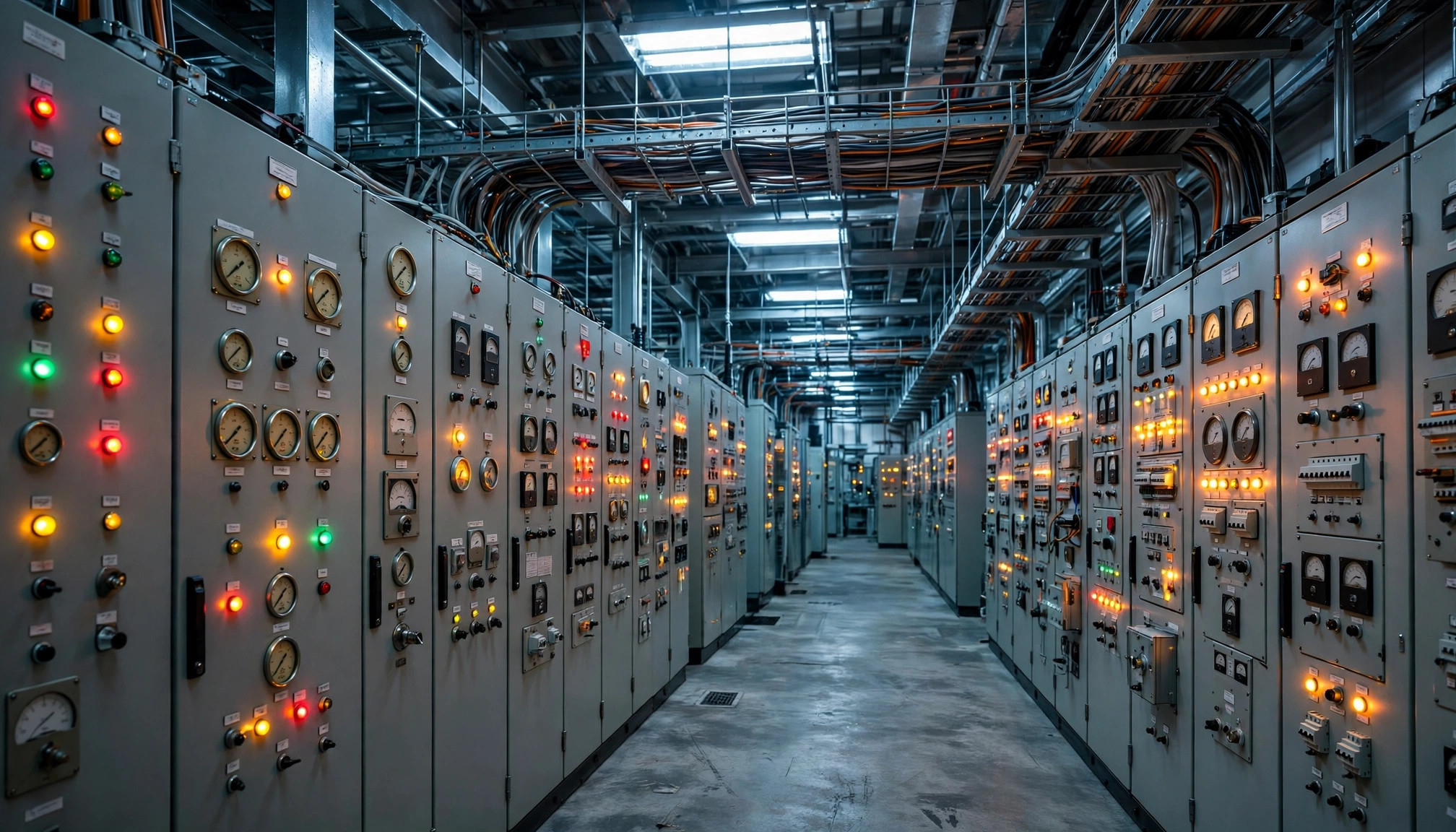
People often assume that securing a factory is like securing an office, only with more machines. The differences run deeper. In IT, the top priority is usually confidentiality: keeping data secret. In OT, the top priority is usually availability and safety: keeping the physical process running and preventing harm. Patching illustrates the contrast. An office server can be rebooted for updates on a Sunday night. A control system may run a continuous process for months, and rebooting it requires scheduling a maintenance window, testing the patch on a replica, and sometimes getting vendor approval. This is why many OT devices run outdated software, and why defenders need tools that protect them in place rather than assuming they can be patched like laptops.
There is also a lifespan gap. Office computers are replaced every few years. Industrial controllers can remain in service for fifteen to twenty years or more. Security approaches for OT must work alongside equipment designed before modern threats existed, which is exactly why research projects like AICOT focus on network-level detection and monitoring rather than on-device agents that legacy hardware could never run.
Real-World Stakes: Energy, Water, Transport, and Manufacturing
The sectors AICOT targets are the ones societies cannot function without. Energy grids balance supply and demand every second. Water systems treat and distribute drinking water. Transport networks move people and freight. Manufacturing produces everything from medicine to food packaging. A cyber incident in any of these sectors can cascade: a compromised grid destabilizes factories, a disrupted water plant affects hospitals, and a halted port slows supply chains across a continent.
Regulators in Europe recognize this. Frameworks such as the NIS2 directive raise cybersecurity requirements for operators of essential services, pushing them toward continuous monitoring and incident reporting. Platforms like the one AICOT is building are intended to give these operators practical tools that fit the directive’s expectations: detection tailored to OT, integration with security operations, and mechanisms for sharing threat intelligence across borders.
Questions People Ask About AICOT
The acronym is new enough that most questions about it come from people who encountered the name in a funding announcement, a research paper, or a solar energy context and want to know which AICOT they are reading about. These are the questions that come up most often.
Is AICOT a product I can buy?
No, AICOT is a research project, not a commercial product. It is funded to develop and validate a platform, with pilot validation planned as part of the research effort. If you need protection for industrial systems today, you should look at established OT security vendors and integrators rather than waiting for a research platform. What AICOT contributes is knowledge, prototypes, and validated methods that can flow into commercial tools and industry practice over time.
Who funds the AICOT project?
AICOT is funded by the European Union’s Digital Europe Programme under grant agreement No. 101249826. The Digital Europe Programme supports the deployment of digital technologies, including cybersecurity, across EU member states. Like all EU-funded projects, AICOT carries a disclaimer that the views expressed are those of the authors and not necessarily those of the EU or the European Cybersecurity Competence Centre.
What does AICOT protect exactly?
AICOT protects operational technology environments in critical infrastructure. That means the control systems, networks, and protocols behind energy, water, transport, and manufacturing. The platform uses AI to detect cyber threats in these environments, analyzes the industrial protocols they speak, and shares threat intelligence across operators.
How is AICOT different from normal antivirus or firewall tools?
AICOT is designed for industrial control networks, not office IT. Conventional tools inspect internet-style traffic and look for known malware. AICOT works with OT protocols such as Modbus, DNP3, PROFINET, and IEC 61850, learns the normal rhythm of physical processes, and flags anomalies that generic tools cannot interpret. It complements traditional security rather than replacing it, and it feeds its findings into SIEM systems so security teams see the full picture.
Is OMRON’s aicot the same thing as the EU project?
No, they are two completely different things that share an acronym. The EU project is about AI-driven cyber defense for industrial control systems. OMRON’s AICOT stands for Anti-Islanding Control Technology, an electrical engineering technology that prevents solar inverters from backfeeding the grid during power outages. Same letters, different worlds. The section below explains the OMRON technology in detail so the confusion is easy to clear up.
The Other AICOT: OMRON’s Anti-Islanding Control Technology
If you search for “aicot,” you will find results about solar power as well as cybersecurity. That is because OMRON, the Japanese industrial automation company, developed a technology with the same acronym years before the EU project existed. Understanding both meanings keeps you from mixing up a grid-safety device with a cyber defense platform.
What Islanding Means in Solar Power
Solar power systems keep generating electricity as long as the sun shines, even when the main power grid goes down. When a section of the grid is disconnected but local solar installations keep feeding power into it, that section becomes an “island” of live electricity. Islanding is dangerous because utility workers repairing lines may believe the power is off, while solar-equipped homes or businesses are still energizing the wires. It can also damage equipment when the grid reconnects out of sync with the island.
Traditional anti-islanding mechanisms watch the grid’s voltage and shut down inverters when the voltage changes in a way that suggests an outage. This works for a single installation, but when hundreds of solar systems are clustered together, as in a dense residential neighborhood, their inverters can interfere with one another and the voltage-based methods can fail to detect the outage reliably.
How OMRON’s AICOT Detects Grid Failure in 0.2 Seconds
OMRON’s answer was AICOT, short for Anti-Islanding Control Technology. Instead of watching voltage, OMRON’s technology detects outages by monitoring changes in grid frequency. The company developed the control algorithms using engineering simulation tools and built a patented approach that could detect an islanding condition in 0.2 seconds, fast enough to shut down inverters well within the limits set by grid codes, which generally require shutdown within seconds of a grid failure.
OMRON launched a PV inverter equipped with the new technology in 2011, and the approach was later adopted as part of Japan’s official standard for grid connection, needed for the JET certificate that is mandatory for connecting solar systems to the Japanese grid. To encourage wider adoption of safe solar installations, OMRON released the patent for the technology publicly after years of development, so that other manufacturers could use it in their own inverters. The result was that dense clusters of rooftop solar systems could be installed across whole communities without the previous restrictions.
Two Meanings, One Acronym: How to Tell Them Apart
When you see the term AICOT, the context tells you which one is meant. If the text talks about Modbus, anomaly detection, the Digital Europe Programme, or critical infrastructure cybersecurity, it is the EU research project. If it talks about inverters, islanding, frequency detection, JET certification, or solar installations, it is OMRON’s technology. A quick way to confirm is to check the source: the EU project lives at aicotproject.eu, while OMRON’s technology is described in OMRON’s own engineering and solar materials. Neither meaning is wrong; they simply belong to different industries that happened to choose the same four letters.

How to Follow the AICOT Project
Because AICOT is an active research effort, the most reliable updates come from the project itself. The official website, aicotproject.eu, is where deliverables, news, and event announcements are published as the work progresses. Pilot validation is planned as part of the research, which means real industrial environments will be used to test the platform’s detection methods under realistic conditions. Results from those pilots will show how well AI-based OT detection performs outside the laboratory, and they are the milestones worth watching.
Keeping the official site as your reference point matters because details such as pilot sites and validation timelines are typically published there as they are confirmed.
Checking the Trust Signals of Research Project Websites
Research projects live and die by trust. Before you rely on a project’s website for partnership decisions or technical claims, it pays to check a few basic trust signals. A legitimate project site usually has a clear funding statement, named organizations, and a domain with some history behind it. One quick check is to check the domain age of the project website, since established projects tend to operate from domains that have existed for a while rather than freshly registered ones.
It also helps to see how visible the site is in search results. You can check the SEO ranking of a project’s website to gauge whether it appears for its own name and related terms, and run an SEO score check to see whether the site is technically healthy. These checks do not prove a project is genuine, but a site that ranks for its own name and scores well technically is at least behaving like a real, maintained web presence.
Domain age is also worth understanding in context. If you are unsure whether domain age affects SEO, the short answer is that age alone does not guarantee rankings, though older domains with consistent history tend to carry more trust signals. A free domain age checker tool gives you that data point in seconds.
AICOT FAQs
What does AICOT stand for?
AICOT stands for “AI-Driven Cyber Defense Platform for Operational Technology Environments in Critical Infrastructure.” It is the name of an EU-funded research project that applies artificial intelligence to the cybersecurity of industrial control systems.
Is AICOT an EU project?
Yes, AICOT is funded by the European Union’s Digital Europe Programme under grant agreement No. 101249826. The funding supports research into AI-based detection and protection for operational technology in critical infrastructure sectors.
What is operational technology?
Operational technology (OT) is the hardware and software that monitors and controls physical industrial equipment. It includes programmable logic controllers, SCADA systems, sensors, and actuators in energy, water, transport, and manufacturing. Unlike office IT, OT directly affects physical processes, which is why it needs specialized security.
Which industries does AICOT target?
AICOT targets critical infrastructure: energy, water, transport, and manufacturing. These are the sectors where a cyber incident can disrupt essential services, so they are the priority for OT-specific cyber defense research.
How does AI help defend operational technology?
AI learns the normal patterns of industrial networks and flags deviations. Because OT traffic is highly repetitive, anomalies such as unexpected commands stand out clearly, allowing the platform to detect attacks that signature-based tools would miss.
What are Modbus, DNP3, PROFINET, and IEC 61850?
They are communication protocols used by industrial control systems. Modbus is common in factory automation, DNP3 in utilities, PROFINET in manufacturing, and IEC 61850 in electrical substations. AICOT analyzes these protocols deeply because they were designed without modern security features and are common attack surfaces.
What is a SIEM and how does AICOT use it?
A SIEM is a system that collects and correlates security events across an organization. AICOT feeds OT security events into SIEM systems so that security teams can correlate industrial incidents with IT events, giving them a unified view of multi-stage attacks.
Can I download or buy the AICOT platform?
No, AICOT is a research project, not a commercial product. It develops and validates methods and prototypes, with pilot validation planned as part of the research. Organizations needing OT protection today should work with established OT security providers.
What is OMRON’s AICOT?
OMRON’s AICOT stands for Anti-Islanding Control Technology. It is a patented electrical engineering technology that detects grid power failures in 0.2 seconds by monitoring frequency changes, allowing solar inverters to shut down safely. It was launched in a PV inverter in 2011 and adopted into Japan’s grid connection standards.
Why do two different technologies share the name AICOT?
It is a coincidence: two different industries chose the same acronym. OMRON coined AICOT for its solar anti-islanding technology years before the EU cybersecurity project adopted the same letters. Context, such as whether the discussion involves solar inverters or cyber defense, reveals which one is meant.
What is islanding in solar power systems?
Islanding happens when solar installations keep powering a section of the grid after the main grid has failed. This creates a dangerous “island” of live electricity that can injure repair workers and damage equipment. Anti-islanding technology like OMRON’s AICOT detects the outage and shuts down inverters to prevent it.
How fast does OMRON’s AICOT detect a power outage?
OMRON’s AICOT can detect an islanding condition in 0.2 seconds. It works by monitoring frequency changes rather than voltage changes, which avoids the interference problems that occur when many solar inverters are installed close together.
Where can I find official information about the AICOT project?
The official website is aicotproject.eu. It publishes the project’s funding details, objectives, news, and results as the research progresses, making it the authoritative source for anyone who needs verified information.
Does AICOT relate to the NIS2 directive?
AICOT’s goals align with NIS2, the EU directive raising cybersecurity requirements for essential services. The directive pushes operators toward continuous monitoring and incident reporting, and platforms like AICOT’s are intended to provide OT-appropriate tools that support those expectations.
Conclusion
AICOT is a name worth knowing for two very different reasons. In cybersecurity, it is an EU-funded research project using artificial intelligence to defend the operational technology behind Europe’s critical infrastructure, from anomaly detection and OT protocol analysis to SIEM integration and threat intelligence sharing. In solar energy, it is OMRON’s patented anti-islanding technology that keeps clustered rooftop installations safe by detecting grid failures in fractions of a second. Both are serious engineering efforts, and confusing them only costs you a few seconds once you know the context clues.
If you take one thing from this guide, let it be this: critical infrastructure security is a distinct discipline with its own tools, protocols, and research community, and projects like AICOT exist because office-style security cannot protect a turbine hall. Follow the project’s official channels for pilot results, stay skeptical of secondhand claims, and keep learning how the industrial world differs from the IT world. For a deeper definition of the field itself, see the Wikipedia article on Operational technology.