Chief Technical Examiner: Duties, Role and Guide
A Chief Technical Examiner (CTE) is a senior independent authority who audits public works and procurement contracts for quality, cost fairness and compliance. In India, the role sits within the Chief Technical Examiners Organisation under the Central Vigilance Commission, where experienced engineers inspect estimates, tenders, site work and contractor bills to prevent waste, overpayment and substandard construction.
The role rarely makes headlines, yet it stands behind some of the largest infrastructure decisions in the country, from highways and bridges to government buildings and digital systems. Whenever public money pays for technical work, someone must verify that the work was planned properly, awarded fairly, built to standard and paid for honestly. That is the examiner’s job.
This guide explains what a Chief Technical Examiner does, how technical examinations work at each stage of a project, what qualifications the position demands, and how contractors can prepare for one.
What Is a Chief Technical Examiner?
A Chief Technical Examiner is a senior expert whose core duty is to test technical work against a defined standard and make an independent judgment on whether it passes. The defining feature of the role is independence. The examiner works outside the team that planned, designed or built the project, which allows findings to be reported without pressure from the people responsible for delivery.
In its most formal sense, the title belongs to India’s governance system. The Chief Technical Examiners Organisation (CTEO) functions as the technical wing of the Central Vigilance Commission, the country’s apex anti-corruption body. It is staffed by senior engineers, typically holding the rank of chief engineer, supported by teams of technical examiners and field officers. Their mandate covers the concurrent technical audit of major government works: checking that estimates are realistic, tenders are fair, construction matches the contract, and payments reflect work actually done.
Outside this formal setting, the same title is used more loosely in industry, where firms sometimes appoint a chief technical examiner to sign off on designs or validate complex systems before they go live. The responsibilities differ, but the central idea is the same: one accountable authority verifies that technical claims match technical reality.
The History Behind the Role
The idea of an independent technical examiner grew out of a practical problem. Financial auditors could verify that money was spent according to the books, but they could not judge whether a road was built with the right grade of material or whether a contractor’s measurements were accurate. Bridging that gap required engineering expertise combined with audit discipline.
According to widely cited accounts of the organisation’s history, a dedicated technical examination cell was created in 1957 within India’s Ministry of Works, Housing and Supply to conduct concurrent technical audits of Central Public Works Department projects. The aim was to catch quality failures, inflated rates and irregular tendering while projects were still in progress, when corrections were cheapest.
A turning point came in 1964. Following the recommendations of the Committee on Prevention of Corruption, the examination function was transferred to the newly formed Central Vigilance Commission. This gave technical oversight a direct link to the country’s vigilance and anti-corruption machinery. Later, the Central Vigilance Commission Act of 2003 provided statutory backing, cementing the organisation’s authority to examine government-funded works across departments.
This history explains the role’s unusual blend of skills: part engineer, part auditor and part investigator.
Why Technical Examination Matters
Public infrastructure fails in ways that are invisible on paper. A bill can be arithmetically perfect while the road it describes is already cracking. A tender can follow every procedural rule while still being written to favour one bidder. A completion certificate can be signed on time for a building that used weaker steel than the contract demanded. These gaps cost governments enormous sums and, in the worst cases, endanger lives.
Technical examination matters because it tests the physical and procedural reality behind the paperwork. Site visits, material tests, measurement checks and rate analysis turn abstract documents into verifiable facts. When a bridge collapses or a hospital’s power system fails during a crisis, the root cause is often a quality or procurement lapse that an examination could have flagged earlier.
Beyond catching faults, the process deters them. Contractors and officials who know their work will face independent technical scrutiny keep records cleaner and standards higher, and a clean examination report is the best defence an honest department can have.
Core Duties of a Chief Technical Examiner
The examiner’s work follows the life cycle of a project. Each stage has its own risks, and each gets its own form of scrutiny.
Checks Before the Tender Goes Out
Examination can begin before any contractor is involved. At this stage, the officer checks whether the project has a genuine need, proper administrative approval and a sound cost estimate. The estimate should use fair market rates and realistic quantities. Designs should be reasonably complete, because vague drawings invite costly changes later.
The reviewer may flag tender conditions that narrow competition, such as brand-specific requirements or unreasonably tight bid periods. Split purchases designed to stay under approval limits also attract attention.
Reviewing Tender and Bid Fairness
The tender stage must give every eligible bidder a fair chance to win. The examiner studies the tender notice, eligibility criteria, bid evaluation method and the final award decision. Rejected bids may be examined to understand why they lost, and the office may ask why a higher-priced offer was chosen over a cheaper one.
Post-bid negotiations need particular care. Discussions with bidders should not become a back door for changing the scope, price or terms of the deal. Any change requires written justification and proper approval. A fair award does not always mean the lowest price, but the reasons for the choice must be clear, documented and applied equally to all bidders.
Inspection During Project Execution
Once work begins, the examiner verifies that site reality matches the contract. This is the most hands-on part of the job. Field teams visit sites, take material samples, measure quantities and compare the finished work against drawings and specifications. Measurement books, test reports, site diaries and contractor bills are checked against what the team can see and verify on the ground.
Variations and extra items are a common risk area. Changes are normal in large projects, but every change needs a genuine reason, a fair rate and formal approval. A pattern of excessive variations may indicate that the original design or estimate was weak, or that the contract is being used as a vehicle for extra payments.
Post-Completion Examination
Examination does not end when the ribbon is cut. Completed works can be reviewed for durability, defect liability and final account settlement. Latent defects sometimes surface only after the project has been in use, and the final bill is often where overpayments hide. A post-completion review closes the loop and provides lessons for future contracts.
Supporting Vigilance and Anti-Corruption Work
When technical findings point to deliberate wrongdoing rather than error, the examiner’s report becomes evidence. The office explains the technical side of a suspected loss: how a rate wa s inflated, how tender conditions favoured one firm, or how substandard material passed inspection. Vigilance and investigation authorities then decide what action to take. The examiner does not replace the investigator, but provides the expert facts that make investigation possible.
Which Projects Fall Under a CTE’s Eye
Technical examination focuses on works where the stakes are high, which usually means large budgets, public safety implications or complex procurement. Typical subjects include highways, bridges, government buildings, railway works, water supply and drainage systems, and power projects. Procurement of heavy machinery, vehicles and large IT systems also falls within scope, along with service contracts for maintenance and facility management.
Works are usually selected on a risk basis. Higher-value projects face deeper scrutiny, and surprise inspections during construction help verify real conditions rather than staged ones. The exact thresholds and selection methods vary by organisation, but the principle is consistent: limited examination capacity must be aimed where public money and public safety are most exposed.
How a Technical Examination Works, Step by Step
An intensive technical examination is far more than a file review. It is a structured process that follows the money and the material from approval to payment. Here is how it typically unfolds.
Step 1: Selecting the Works
The examination office plans its workload using risk signals: project value, past irregularities in the department, complaints, and random sampling. High-risk and high-value works get priority. Surprise elements are deliberate, because announced visits tend to produce cleaner conditions than real ones.
Step 2: Reviewing the Records
Before visiting the site, the team studies the paper trail: administrative approvals, technical sanctions, detailed estimates, tender documents, bid evaluations, contracts, measurement books, running account bills and test reports. These records show how the project moved from an idea to a paid contract, and they reveal where the story stops making sense.
Step 3: Inspecting the Site
Field officers visit the work site to compare documents with reality. They check material quality, workmanship, dimensions and progress. For buildings, this may mean checking concrete, steel, plumbing and finishes. For roads, it means layer thicknesses and surface quality. For equipment, it means supply records, serial numbers and performance tests.
Step 4: Testing and Measurement
Samples are taken and tested, either in the field or at laboratories. Quantities are independently measured and compared against billed amounts. Photographs and signed records preserve the evidence. This step turns suspicions into proof, because a test result or a measured dimension is hard to argue with.
Step 5: Reporting the Findings
The office compiles its findings into a report sent to the concerned department. Each finding states what happened, which rule or standard was violated, how much money is at risk, and what action is required. Departments are given a chance to respond, explain gaps or contest findings before conclusions are finalised.
Step 6: Recovery and Follow-Up
Findings lead to action. Departments may be asked to recover overpaid amounts, repair defective work or tighten their procedures. Serious cases are referred to vigilance authorities. Follow-up checks confirm that promised corrections actually happened, closing the accountability loop.
Common Findings in Technical Examination Reports
Examination reports repeat certain patterns across departments and decades. The most frequent finding is overbilling and inflated rates: Quantities billed beyond what measurements support, rates higher than prevailing market levels, and duplicate billing for the same item all appear regularly. Sometimes the cause is a genuine measurement error, but examiners are trained to separate honest mistakes from systematic padding.
Quality failures come next. Materials that do not meet the specified grade, concrete that fails strength tests, or finishes that fall below the contract standard are common discoveries. Verification sits at the heart of this work: an examiner confirms a contractor’s claims against the record, the same verification instinct that leads a careful buyer to use a domain age checker to confirm a website’s stated history before trusting it.
Tender irregularities include restrictive conditions, unexplained rejection of lower bids, and award decisions that do not match the stated evaluation criteria. Documentation gaps, such as missing measurement books, unsigned test reports or incomplete site diaries, may seem minor but they destroy the audit trail that proves work was done properly. Unjustified variations, where extra items balloon the contract value without adequate reason, round out the usual list.
Not every finding proves misconduct. Many arise from weak planning, poor supervision or careless record keeping. A good examiner distinguishes error from abuse, and reports facts rather than suspicions.
Chief Technical Examiner vs Other Audit Roles
The examiner’s role is often confused with neighbouring professions. The distinctions matter, because each role answers a different question.
What is the difference between a CTE and a financial auditor?
A financial auditor checks the books; a CTE checks the physical reality behind the books. A financial audit can confirm that a payment of ten million was properly authorised and correctly recorded, but it cannot tell you whether the ten million bought the bridge it was supposed to buy. The examiner measures the bridge. The two functions complement each other, and the strongest oversight systems use both.
How is a CTE different from a quality control engineer?
A quality control engineer works inside the project; the CTE stands outside it. Quality control is part of delivery: the contractor’s or department’s own engineers check work as it progresses and fix problems in real time. The examiner arrives independently, with no stake in the project’s success, and judges the outcome against the contract. This outside position is what gives the findings credibility.
Can a Chief Technical Examiner investigate corruption?
A CTE builds the technical evidence; vigilance authorities run the investigation. The examiner can identify inflated payments, unfair tender terms and serious process gaps, and can quantify the loss in engineering terms. But determining criminal intent and prosecuting wrongdoers belongs to the vigilance and law enforcement bodies. The examiner’s technical report is often what starts that process.
Qualifications and Career Path
Becoming a Chief Technical Examiner requires a rare combination of deep engineering knowledge and administrative judgment. The typical profile starts with a degree in civil, mechanical, electrical or a related engineering discipline, followed by many years of hands-on experience in project execution, estimation and contract management.
Experience matters more than credentials alone. An examiner who has supervised construction sites, prepared estimates and managed contracts can spot irregularities that a purely academic expert would miss. Familiarity with public procurement rules, tendering procedures, measurement methods and audit standards is essential, because findings must be framed in terms that departments can act on.
Beyond technical skill, the position demands integrity, independence and clear writing. Reports must translate complex engineering faults into plain language, showing what happened, why it matters and what action is due. Because exact recruitment rules, pay scales and eligibility conditions differ by organisation and change over time, candidates should check current official notifications rather than relying on general descriptions.
How Contractors Can Prepare for a Technical Examination
A technical examination is not something to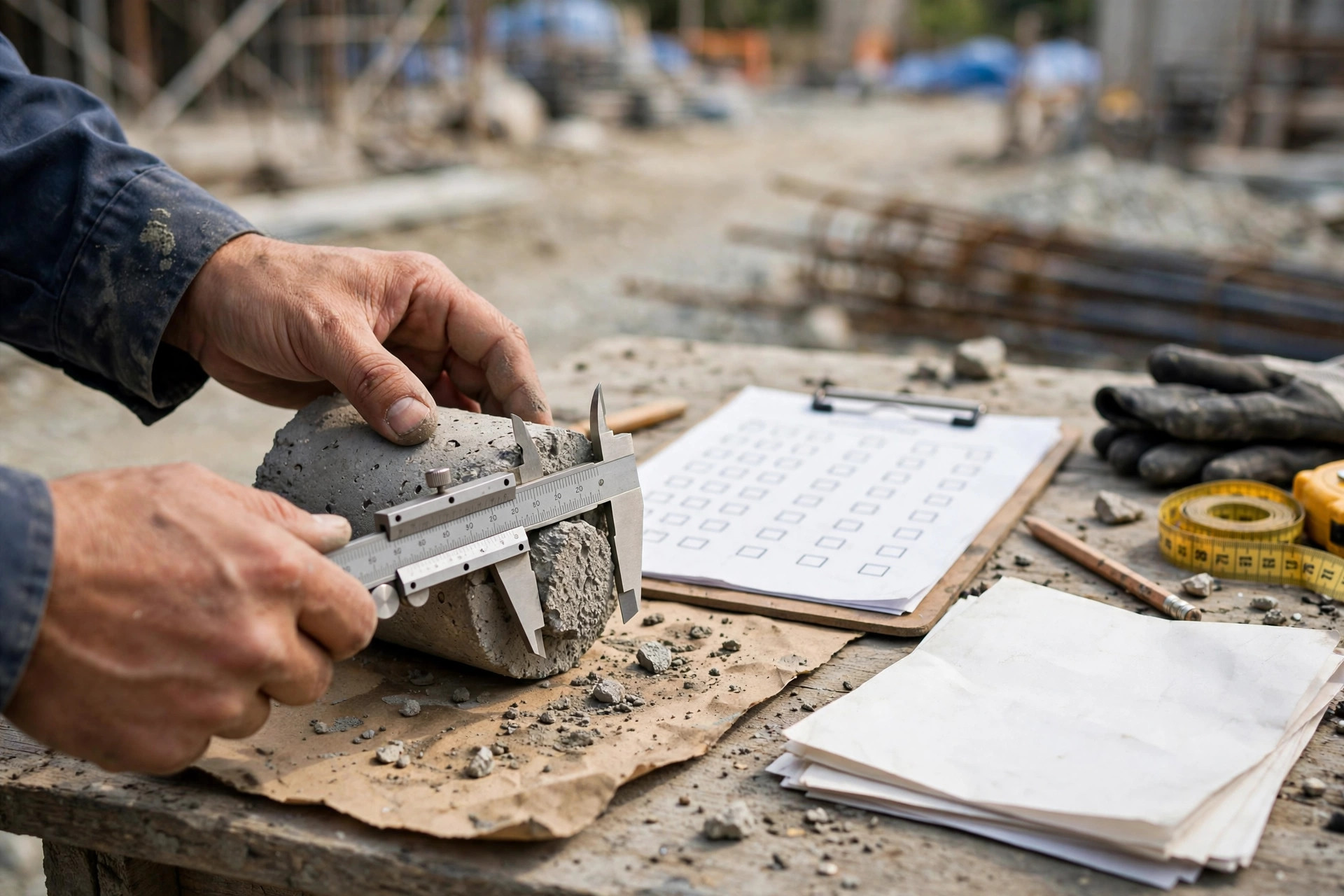 fear if the work is genuine, but preparation makes the process smoother for everyone. The single most important habit is documentation discipline. Keep measurement books updated and signed, maintain test reports for every material used, record site instructions in writing, and ensure that bills match measured quantities exactly.
Testing should follow the prescribed schedule, not be rushed at the end. Cube tests for concrete, material approvals, and third-party checks should happen when the work happens. Digital records add a strong layer of protection: electronic measurement books, geo-tagged site photographs and system-generated logs create an audit trail that is difficult to dispute.
Contractors should also understand the contract deeply. Knowing the specifications, approved rates and variation clauses prevents accidental non-compliance. Just as a website owner runs an SEO score check before a major launch to catch issues early, a smart contractor runs internal audits before an examiner arrives, fixing documentation gaps and verifying measurements in advance.
Finally, cooperation matters. Delayed or evasive responses invite deeper scrutiny, while prompt, complete replies backed by records signal confidence in the work.
New Challenges: Digital Projects and Modern Materials
Technical examination was designed for concrete and steel, but modern public spending increasingly flows into digital systems: cloud services, software development, data platforms and smart-city sensors. Examining these contracts requires new skills, from reviewing code delivery and data migration logs to testing whether a software system meets its service-level agreements.
New materials and methods add their own complexity, so examination offices must continuously update their checklists, testing standards and expert panels to keep pace.
Data is changing the approach too. Risk-based selection now uses analytics to flag suspicious patterns, such as repeated awards to the same contractor or unusual bidding behaviour. And the audit mindset extends naturally to digital assets: website audits weigh many trust signals when judging an online project’s credibility, technical teams often debate how domain age affects SEO when assessing a site, and routine health checks such as a free SEO ranking check apply the same principle of verifying claims against evidence. Whether the asset is a highway or a homepage, independent verification is what keeps spending honest.
Frequently Asked Questions
What is the full form of CTE?
CTE stands for Chief Technical Examiner. In the Indian government context, it also refers to the Chief Technical Examiners Organisation, the technical wing of the Central Vigilance Commission.
What does a Chief Technical Examiner actually do?
A CTE independently audits public works and procurement contracts for quality, cost fairness and rule compliance. The work covers estimates, tenders, site execution, measurements and contractor payments, backed by field inspections and material testing.
Who appoints the Chief Technical Examiner?
In India, the examination function operates under the Central Vigilance Commission. Senior engineers are designated to the organisation, which works independently of the departments whose projects it examines, so that findings remain unbiased.
Which projects does a CTE inspect?
A CTE typically examines high-value public works: roads, bridges, government buildings, railways, water supply, power projects, machinery purchases and large IT contracts. Selection is risk based, with larger and more complex works receiving deeper scrutiny.
How often are technical examinations carried out?
Examinations follow a risk-based schedule rather than a fixed calendar. Works can be examined before tendering, during execution through surprise visits, or after completion, depending on value, complexity and risk signals.
Can a Chief Technical Examiner stop a project?
A CTE does not usually halt projects directly, but its findings can force corrective action. Departments must respond to findings, recover overpayments and fix defects, and serious irregularities can trigger vigilance proceedings that affect the project.
What happens when a CTE finds overpayment?
The department is asked to recover the excess amount from the contractor. The report quantifies the overpayment, cites the violated rule or measurement, and follow-up checks confirm that recovery or correction actually happened.
What qualifications do you need to become a CTE?
A strong engineering background with extensive experience in execution, estimation and contract management is the usual foundation. Knowledge of procurement rules, tendering procedures and audit standards is essential, along with the integrity and clear writing the reporting role demands.
Is the CTE the same as a chief examiner of an education board?
No, they are different roles that share similar wording. An examination board’s chief examiner oversees question papers, marking and grade standards for students, while a Chief Technical Examiner audits engineering works and procurement. One concerns assessment, the other concerns technical systems and public spending.
How is a technical examination different from a regular audit?
A regular audit verifies financial records; a technical examination verifies the physical and procedural reality behind them. It involves site visits, measurements, material tests and contract analysis that a desk-based financial audit cannot perform.
Do contractors have to cooperate with a technical examination?
Yes, cooperation is expected and non-cooperation invites deeper scrutiny. Contractors should provide records, measurement books, test reports and site access promptly, since complete documentation is the fastest way to resolve queries.
What records should be kept ready for an examination visit?
Approvals, estimates, tender documents, contracts, measurement books, running bills, material test reports and site diaries should all be complete and signed. Digital logs such as electronic measurement books and geo-tagged photographs strengthen the audit trail.
Has technology changed how CTEs work?
Yes, digital contracts and data tools are reshaping the role. IT and cloud procurements need new examination skills, while electronic records, analytics-based risk selection and geo-tagged evidence are making examinations faster and harder to dispute.
Why is independence so important for a CTE?
Independence is what makes the findings credible. Because the examiner works outside the delivery team, reports can state uncomfortable facts without pressure from the officials or contractors responsible for the project.
Conclusion
The Chief Technical Examiner occupies a unique position in public governance: an engineer with the authority of an auditor and the purpose of a guardian. From pre-tender checks to post-completion reviews, the role follows public money through every stage of a project, testing whether plans were sound, awards were fair, work met the standard and payments were honest.
For departments, a clean examination report is proof of good governance. For contractors, understanding the process turns a feared inspection into a routine quality milestone. And for citizens, the role is a quiet assurance that the roads they drive on, the buildings they use and the systems they depend on were built to the standard their taxes paid for. To understand the institution behind the role, you can read more about the Central Vigilance Commission on Wikipedia, the anti-corruption body under which India’s Chief Technical Examiners Organisation operates.