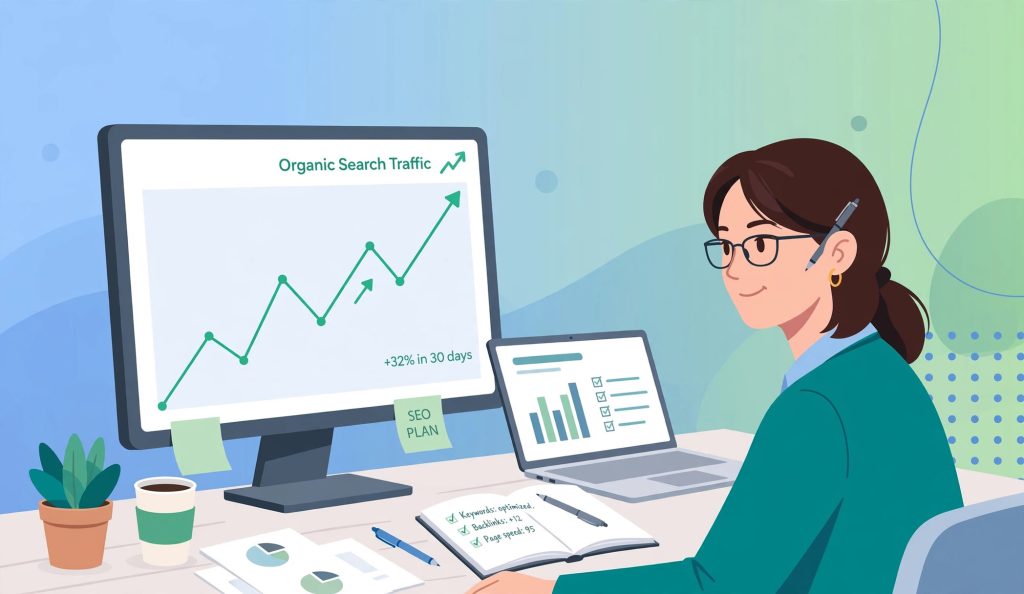
Everyone throws around the term SEO expert. Most of the people using it could not explain what an organic SEO expert actually does on a normal working day. So let us fix that. In this guide, we talk honestly about what an organic SEO expert really does, what separates a real practitioner from a smooth talker, and why hiring the right one can either grow your business or quietly waste your entire marketing budget.
Organic SEO is not about tricking Google. It is about understanding what Google wants to show its users and building your site so it genuinely deserves that spot. No shortcuts, no magic buttons, no overnight miracles. Just compounding work that pays off for years.
Last updated: October 13, 2026. Refreshed with current hiring benchmarks and evaluation criteria.
Organic SEO vs Paid Traffic
When you pay for ads, you rent attention. The moment you stop paying, the traffic stops. Organic SEO works the other way around. You earn rankings in the natural search results, and those rankings keep sending visitors month after month, year after year, without paying per click.
This is the core of what an organic SEO expert sells you: an asset, not a subscription. A paid campaign is a faucet you keep turning. Organic rankings are a well you dig once and draw from for years. Building the well takes longer and costs more upfront, but once it is dug, it keeps producing while you sleep.
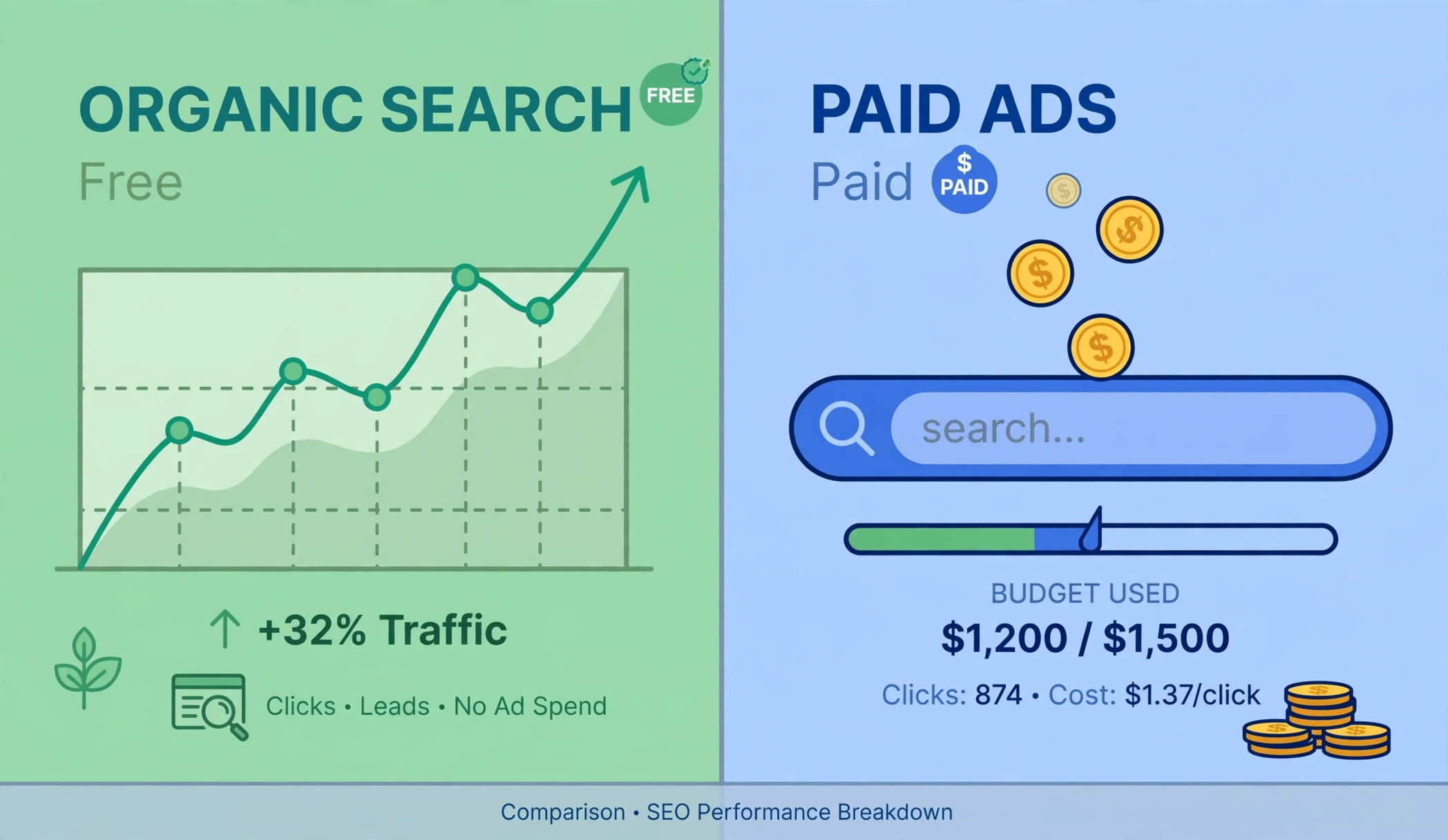
The difference shows up in the math. Paid traffic scales in a straight line with spend: double the budget, double the clicks. Organic traffic compounds. A page that ranks today keeps ranking tomorrow, and every improvement an expert makes stacks on top of the last one. That is why businesses that commit to organic search for a full year often look back and realize it became their cheapest source of customers by far.
This does not mean paid traffic is useless. It has its place for testing offers and filling short-term gaps. But if you want a channel that grows more valuable over time instead of resetting to zero every month, organic is the game, and an organic SEO expert is the person you hire to play it well.
What a Real Organic SEO Expert Actually Focuses On
An organic SEO expert is not a jack-of-all-trades marketer. Their work centers on five areas, and the order matters. Anyone who starts with link building before fixing the technical foundation is doing it backwards.
1. Technical Foundation First
Before anything else, a competent expert audits the technical health of your site: page speed, mobile responsiveness, broken links, indexing problems, crawlability. This is the foundation everything else sits on. Publishing great content on a site Google cannot crawl properly is like filling a bucket with a hole in it.
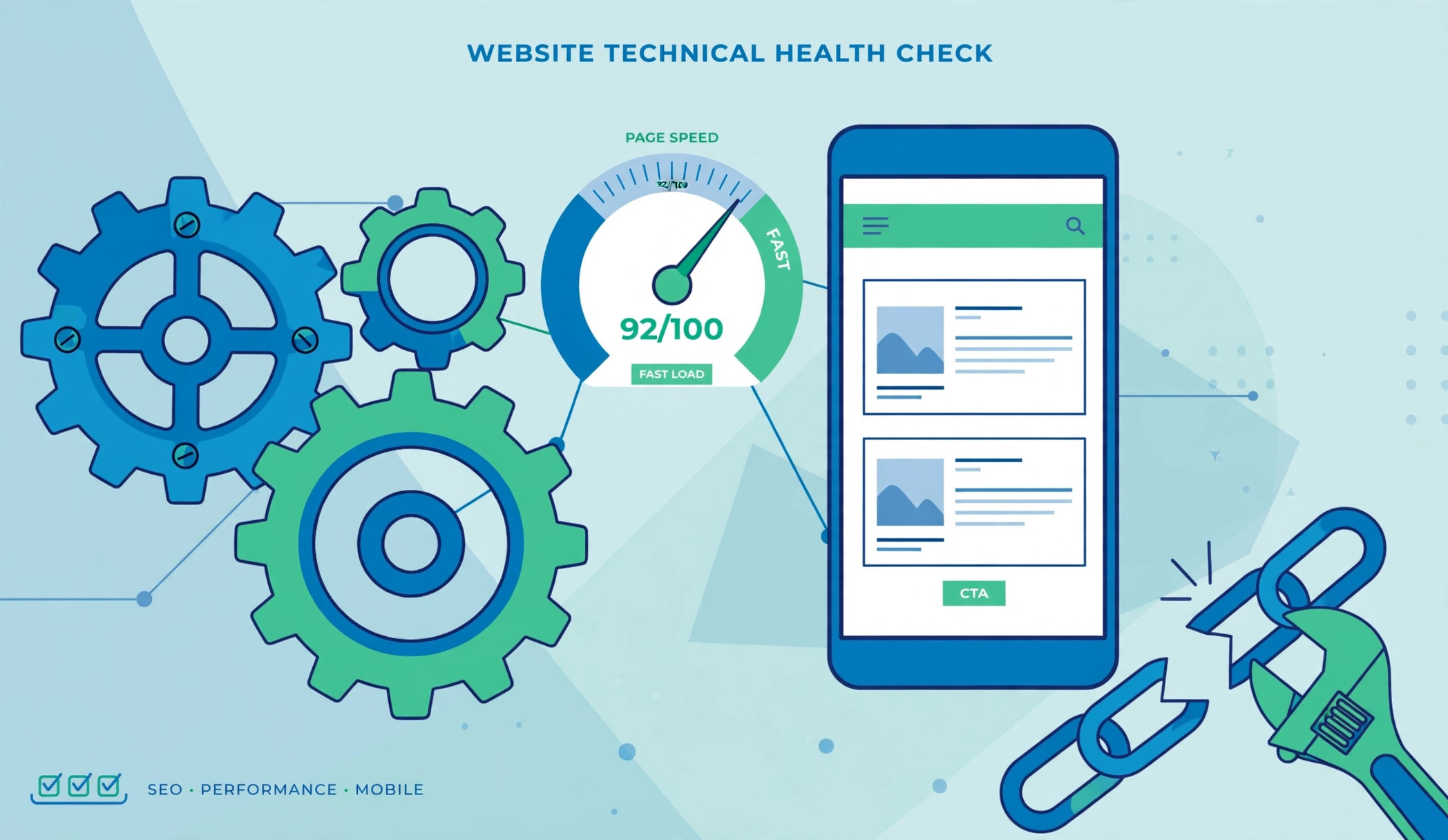
A real expert runs mobile checks as part of every audit, because most of your visitors arrive on phones and Google ranks accordingly. You can see exactly what they look at by running your own site through a mobile SEO check and comparing your results against the issues an expert flags.
2. Real Keyword Research
Real keyword research is not downloading a list of high-volume terms from a tool and stuffing them into pages. It is understanding search intent: what the person typing the query actually wants, and whether your business is the right answer. An expert maps keywords to specific pages, matches content to intent, and ignores vanity keywords that bring traffic but never bring customers.
They also think in topics, not just keywords. A cluster of related pages that covers a subject thoroughly beats ten disconnected pages chasing ten disconnected terms. This is where most DIY efforts fail: they target what is popular instead of what their buyers actually search for.
3. Content That Actually Helps People
Google’s entire business depends on sending users to pages that satisfy them. Content that answers questions completely, honestly, and clearly is what ranks and stays ranked. An organic SEO expert either writes this content or directs it: briefs, outlines, quality standards, and ruthless editing.
Thin, fluffy content is the fastest way to identify someone who does not understand the job. If an expert delivers 500 words of generic filler and calls it optimized because the keyword appears five times, you have hired a writer with a plugin, not an SEO expert.
4. On Page Optimization
Titles, meta descriptions, headers, internal linking, image optimization: this is the craft layer. None of it is glamorous, and all of it matters. Internal linking in particular is where most sites quietly bleed authority. A good expert connects related pages deliberately so link equity flows where it should, every important page gets discovered, and search engines understand how your content fits together.
Image optimization gets skipped constantly. Compressed files, descriptive filenames, and real alt text improve speed and accessibility at the same time. Small details, compounded across hundreds of pages, move rankings.
5. Building Authority the Right Way
Links from other sites still matter enormously. The difference is in how they are earned. Real experts do outreach, guest posting, and digital PR. They earn mentions because the content deserves them. Anyone selling you bulk links or private blog network placements is selling you a future penalty.
Authority built the right way survives algorithm updates. Authority bought cheaply does not. When you evaluate an expert, ask exactly how they build links. The answer tells you everything about whether they are building your future or mortgaging it.
Why Experience Actually Matters Here
SEO changes constantly. Google updates its systems thousands of times a year, with a handful of major updates that reshuffle entire industries overnight. An expert with years of pattern recognition has seen which tactics survive updates and which ones die. They know the difference between a temporary fluctuation and a real problem that needs action.
Google itself emphasizes experience as part of what it looks for in content quality. An expert who has actually done the work, in real markets, with real budgets, brings judgment that no course or certification can teach. When you hire an organic SEO expert, you are buying their scars: every expensive mistake they already made on someone else’s budget so they do not make it on yours.
Experience also shows up in reporting. A seasoned expert tracks the metrics that connect to revenue and explains setbacks honestly. And you should verify their claims yourself: a free tool to check SEO ranking lets you confirm whether the rankings they report match reality, which is the simplest accountability test there is.
Red Flags to Watch For
Before you sign anything, watch for these warning signs. Any one of them is reason to walk away.
- Guaranteed #1 rankings. Nobody can promise this, and Google says so directly. Rankings depend on competition, algorithm changes, and factors no expert controls. A guarantee is a sales tactic, not a strategy.
- Refusal to explain the strategy. A real expert can explain their work in plain language. “It is proprietary” or “trust the process” means they either do not know or do not want you to know.
- PBNs or bulk link packages. Private blog networks and bulk link deals are shortcuts that end in penalties. Ask how links are built, and listen carefully to the answer.
- No interest in your business. If they never ask about your customers, your margins, or your goals, they are selling a template, not a strategy. SEO without business context is just busywork.
- Vanity metric reports. Rankings for keywords nobody searches, traffic that never converts, impressive charts with no revenue attached. Demand reporting tied to leads, sales, or whatever outcome actually matters to you.
One more practical step before hiring anyone: audit your own site first with a free SEO score check. Knowing your baseline score means you can tell whether an expert’s work is actually moving the needle, and it gives you sharper questions to ask in the interview.
How Long Does Organic SEO Actually Take
Expect three to six months before you see meaningful movement, and stronger, compounding results over a full year. Timelines depend on your competition, how much is broken at the start, and the age and history of your domain.
Site history matters more than most people realize. An older domain with a clean record often gains traction faster than a brand-new one, while a domain with a spammy past can drag for months no matter how good the new work is. Before hiring an expert, it is worth running your domain through a domain age checker tool to understand exactly what you are starting with. Age alone does not rank you, but it shapes the timeline you should expect, and you can read more about how domain age actually affects SEO to set realistic expectations from day one.
Anyone who promises page-one rankings in 30 days is either lying or planning to use tactics that will get you penalized in 60. Real organic growth is slow at first and then accelerates. The businesses that win are the ones that give the process the time it actually needs.
Frequently Asked Questions
What is the difference between an organic SEO expert and a general digital marketer?
A general digital marketer spreads effort across ads, social media, and email, while an organic SEO expert specializes entirely in earning free search traffic. The marketer is a generalist who knows a little about many channels. The organic SEO expert goes deep on one: how search engines crawl, index, rank, and reward content. If search traffic is your priority, hire the specialist. If you need someone to coordinate everything, hire the generalist and let them bring in the SEO expert.
How much does it cost to hire an organic SEO expert?
A competent organic SEO expert typically costs between $1,000 and $5,000 per month, depending on your market and the scope of work. Freelancers sit at the lower end, agencies at the higher end. Anyone charging a few hundred dollars a month is almost certainly outsourcing the work or doing almost nothing. If you are comparing monthly retainers against bundled offers, read our guide on affordable SEO packages to understand what is actually included at each price point before you decide between a package and a dedicated expert.
Can I just do organic SEO myself?
Yes, if you have ten or more hours a week to learn and execute consistently for at least six months. The fundamentals are public knowledge: fix technical issues, research keywords, publish genuinely helpful content, build links honestly. What an expert buys you is speed and judgment: they skip the beginner mistakes, recognize problems faster, and know which levers matter in your specific market. DIY works for small sites with patient owners. It fails when the site is large, the market is competitive, or the owner has no time.
How long before I see results from organic SEO?
Most sites see meaningful movement in three to six months, with compounding gains over twelve months. Brand-new domains take longer than established ones. Highly competitive keywords take longer than niche ones. Sites with technical problems take longer than clean ones. Treat anyone promising faster results with deep suspicion, and treat month one to three as foundation work, not failure.
Once my site ranks, can I stop doing SEO?
You can slow down, but stopping completely lets competitors pass you within months. Rankings are rented from Google’s algorithm, not owned. Competitors keep publishing, Google keeps updating, and content decays as information goes stale. Most businesses drop to a maintenance rhythm: fewer new pages, ongoing technical upkeep, and periodic content refreshes. Think of it like fitness: you can reduce the workouts, but quitting sends you backwards.
What is the biggest mistake businesses make when hiring an SEO expert?
Hiring on price alone and skipping the vetting process entirely. The cheapest quote usually means the least work, the most outsourcing, or the riskiest tactics. Businesses also fail by hiring before their site is ready: no clear offer, no conversion tracking, no way to measure whether the SEO is working. Fix your foundation and your measurement first, then hire, and judge candidates on their process and past results, not their price tag.
What skills should an organic SEO expert have?
A real organic SEO expert combines technical SEO, keyword research, content strategy, analytics, and link building in one skill set. Technical skills cover crawling, indexing, site speed, and structured data. Research skills cover intent mapping and competitive analysis. Content skills cover briefing and editing for search. Analytics skills cover reading Search Console and connecting rankings to revenue. Link building skills cover outreach and digital PR. If a candidate is strong in only one of these, they are a specialist in that slice, not a full organic SEO expert.
Should I hire a freelancer or an agency for organic SEO?
Hire a freelancer for focused work on a budget, and an agency when you need multiple specialists at once. A good freelancer gives you senior-level attention at a lower price, but one person can only do so much. An agency brings a team: strategists, writers, developers, outreach specialists. The tradeoff is cost and the risk of getting handed to a junior account manager. For most small to mid-size businesses, a strong freelancer or small boutique beats a big agency on value.
How do I verify an SEO expert’s past results?
Ask for case studies with real traffic data, client references you can contact, and the specific keywords they moved. Vague claims like “we grew traffic 300 percent” mean nothing without context: 300 percent of what, over what period, and did it convert? Then verify independently. Ask them to show ranking improvements you can double-check yourself with a free SEO ranking checker. An expert with real results welcomes verification. One with fake results dodges it.
What is the difference between organic SEO and local SEO?
Local SEO is a specialized subset of organic SEO focused on location-based searches, while organic SEO covers rankings everywhere. Local SEO adds Google Business Profile optimization, local citations, reviews, and location pages to the standard organic toolkit. If your customers come from a specific city or region, you need both. If you sell nationally or globally, standard organic SEO is the priority and local tactics matter less.
Can an organic SEO expert fix a Google penalty?
Yes, but only after diagnosing whether you are dealing with a manual penalty or an algorithmic demotion, because the fixes are completely different. A manual penalty comes with a notice in Search Console and usually traces to bad links or thin content, which means audits, disavows, and reconsideration requests. An algorithmic demotion has no notice and usually means your content or authority no longer meets the bar, which means rebuilding quality. Recovery takes months either way. Anyone who promises a fast penalty fix is selling hope, not a plan.
How often should I expect updates from my SEO expert?
Monthly reports at minimum, with a plain-language explanation of what was done, why it was done, and what changed as a result. Weekly check-ins make sense during the first month or during active campaigns. What matters more than frequency is substance: completed tasks, not just activity, and metrics tied to your goals, not vanity numbers. If your expert goes silent for two months and then sends a PDF full of charts, you do not have an expert. You have an invoice.
Final Thoughts
An organic SEO expert is worth hiring when you find one who talks about your business first and tactics second. The right expert audits before prescribing, explains before executing, and reports on revenue instead of hiding behind vanity metrics. The wrong one sells guarantees, dodges questions, and bills you while your traffic flatlines.
The work itself is slow, unglamorous, and compounding. That is exactly why it works, and exactly why it is worth paying a real practitioner to do it right. If you want the full background on the discipline itself, start with the definition of Organic SEO on Wikipedia, then come back and hire someone who actually practices what it describes.